Why Journals Get De-Indexed: 8 Mistakes That Trigger Removal
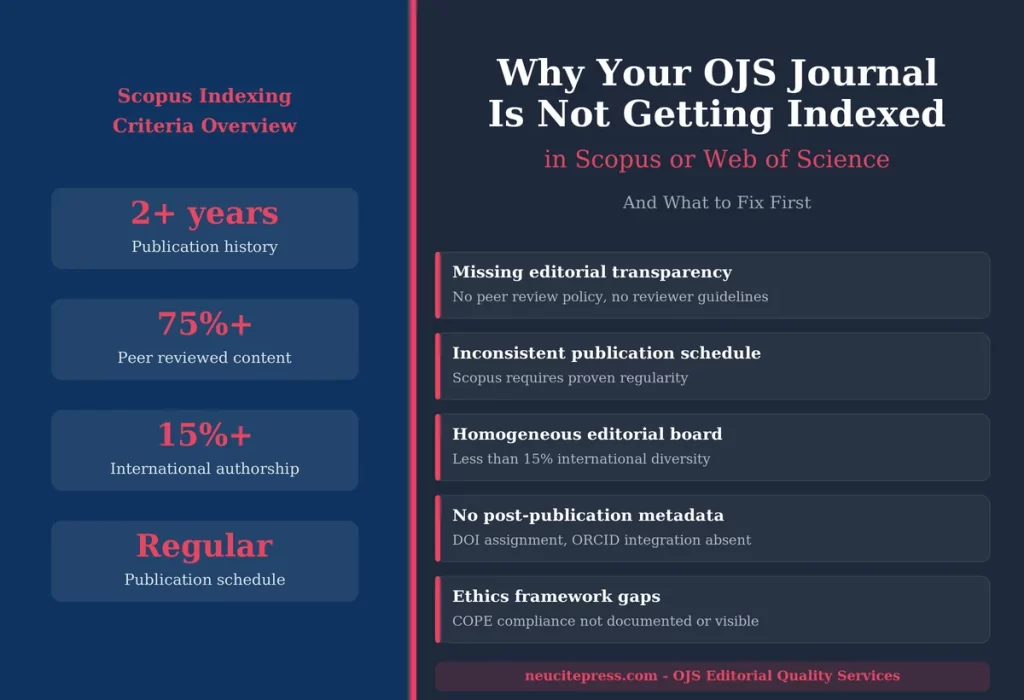
Academic publishing faces a silent crisis that threatens scholarly communication worldwide. Research by Krauskopf (2018) reveals that Scopus discontinued 1,851 publications between 2013-2017. Understanding journal de-indexing reasons is crucial for maintaining visibility in major databases.
Reviewed by the NeucitePress Editorial Board — PhD academics, peer-reviewed journal editors and medical communication specialists.
When publications lose their indexing status, the consequences are severe. Laakso et al. (2021a) documented 176 open access titles vanishing completely from the web between 2000-2019. This disappearance affects thousands of published works and damages institutional credibility.
De-indexing doesn’t only impact low-quality publications. Even legitimate titles can face removal due to technical errors, compliance violations, or content management issues. The process involves removing pages from search engine indexes when quality standards aren’t met.
We recognize the complexity publishers and editors face in maintaining scholarly communication channels. Our evidence-based guidance demystifies technical concepts and provides clear prevention pathways. This section explores eight critical mistakes that trigger removal from major indexing services.
Key Takeaways
- Nearly 2,000 publications lost Scopus indexing over a five-year period
- De-indexing severely impacts researcher visibility and citation rates
- Even high-quality titles can face removal due to technical issues
- Maintaining indexing status requires ongoing compliance monitoring
- Understanding removal triggers helps prevent future disruptions
- Technical errors account for significant portion of indexing losses
- Proactive maintenance preserves scholarly communication channels
Opening Hook: Capturing Pain Points and Compelling Statistics
Database indexing discrepancies create significant challenges for scholarly publications seeking consistent visibility. Research by Singh et al. (2021) reveals stark differences in coverage across major platforms, with important implications for search results and academic impact.
Identifying Key Publication Challenges
Publications face multiple hurdles in maintaining indexed status. Technical compliance requirements, peer review standards, and content quality management demand continuous attention. The competitive nature of database inclusion creates ongoing pressure.
Comparative analysis shows Web of Science indexes approximately 21,000 titles, while Scopus covers 24,000+ publications. Dimensions leads with 30,000+ indexed works. These coverage differences directly affect search visibility and citation metrics.
| Database | Journal Coverage | Primary Focus | Update Frequency |
|---|---|---|---|
| Web of Science | ~21,000 | High-impact research | Weekly |
| Scopus | 24,000+ | Broad scientific coverage | Daily |
| Dimensions | 30,000+ | Comprehensive indexing | Real-time |
“Coverage criteria significantly determine which publications achieve and maintain indexed status, creating a competitive environment for scholarly communication.”
Citing Credible Sources and Data-Driven Benchmarks
Financial consequences of removal from major databases can be substantial. Publications risk losing submission fees, institutional subscriptions, and processing charges. These business impacts underscore the value of maintaining compliance.
We reference authoritative research demonstrating that evolving database coverage standards require continuous monitoring. Technical issues and content management problems represent common triggers for indexing problems.
Understanding the Basics of De-Indexing
At the core of academic content discovery lies the technical process of indexing, which governs how research becomes searchable. We explain these fundamental concepts to help publishers maintain their digital presence effectively.
Definition and Core Concepts
Indexing involves search engines analyzing, categorizing, and storing website content for retrieval. This systematic process allows users to find relevant pages using specific search queries. Crawlers visit websites regularly to evaluate content quality and metadata.
The opposite process removes pages from search engine databases. This can occur intentionally or due to quality violations. Understanding this distinction helps publishers navigate digital visibility challenges.
De-Indexing vs. Indexing: How It Works
Search engines like Google maintain rigorous standards for content inclusion. They may remove material that appears duplicated, plagiarized, or lacks authority. Technical errors in site configuration can also trigger removal.
Major academic databases employ even stricter criteria than general search engines. They require sustained quality over extended evaluation periods. Publishers typically receive warnings before permanent removal occurs.
We emphasize that comprehension of indexing protocols reveals the specific requirements databases use to evaluate publication legitimacy. This knowledge forms the foundation for maintaining search visibility.
The Hidden Impact: Why De-Indexing Matters for Your Journal
The removal of a publication from major databases initiates a rapid decline in its academic and financial standing. This event immediately cuts off the primary channel researchers use to discover relevant content. The consequences are severe and multifaceted.
We quantify this impact to underscore its seriousness. Removal eliminates a publication from standard academic search results. This directly affects author acquisition.
Implications for Traffic and Rankings
The cascade effect on visibility is immediate. Key performance indicators plummet across the board. This loss of position in impact factor calculations damages institutional credibility.
| Metric | Pre-Removal Status | Post-Removal Status | Impact Severity |
|---|---|---|---|
| Organic Search Traffic | Stable/Growing | Sharp Decline (>70%) | Critical |
| Author Submission Rate | Consistent Flow | Significant Drop | High |
| Citation Potential | Strong | Nearly Eliminated | Critical |
This visibility loss compounds existing problems. Pages disappear from Google Scholar. Researchers cannot easily find or reference articles. The business model suffers as revenue streams dry up.
We emphasize that prevention is paramount. Maintaining strong SEO practices and technical health for your website protects the long-term value of your publication. It ensures users can always access your vital content.
Identifying Journal De-Indexing Reasons
The path to sustained indexing involves avoiding critical errors in content management and technical compliance. We identify the primary triggers that lead to removal from major databases.
Duplicate Content and Low-Quality Submissions
Duplicate material represents a significant threat to database inclusion. Search engines refuse to index content that closely matches existing web pages. This includes identical abstracts or substantial text portions across multiple publications.
Low-quality submissions compound these problems. Research by Cobey et al. (2018) established criteria for identifying problematic publications. Inadequate peer review and poorly written manuscripts trigger quality audits.
Technical Missteps and Compliance Violations
Technical issues often cause unintended removal. Broken DOI links and improper metadata implementation create search visibility problems. These errors prevent proper indexing of your site content.
Kratochvíl et al. (2020) demonstrated that databases now evaluate publications holistically. Failure to maintain archival standards or adhere to ethics guidelines leads to immediate action. Comprehensive quality control prevents these compliance violations.
Technical Triggers and Compliance Pitfalls
Behind many indexing failures lie preventable technical oversights in website configuration and server management. These issues often go unnoticed until removal occurs.
Misconfigured Venue Contracts and Hybrid Tech Issues
The robots.txt file represents a critical component for crawler access. This simple text file in your root directory instructs search engines which pages to index.
Common robots.txt errors include overly restrictive directives blocking legitimate bots. Syntax mistakes or incorrect file placement create unintended crawling restrictions.
Noindex meta tags present another technical pitfall. These tags tell search engines to skip specific page content. Journals sometimes accidentally apply them to published articles.
Server configuration problems frequently trigger removal. Incorrect HTTP status codes or timeout issues prevent crawler access to your site.
We recommend specific SEO tools for monitoring crawler accessibility. Google Search Console provides essential visibility into indexing issues.
Canonical tag implementation requires careful attention. Wrong or missing tags confuse indexing systems about authoritative content versions.
Make sure your technical infrastructure supports continuous indexing. Regular robots.txt audits and server response monitoring prevent accidental blocking.
Proper documentation helps identify when platform changes disrupt crawler access. This proactive approach maintains your publication’s search visibility.
Data-Driven Benchmarks and Best Practices for Accreditation
Financial transparency and regulatory compliance form the bedrock of sustainable scholarly publishing operations. We establish concrete metrics that help publications maintain their standing in major databases.
PLOS (2022) provides clear financial benchmarks with article processing charges ranging from $1,695 to $3,350. These figures help publishers plan sustainable open access operations.
Cost Per Attendee and Speaker Honorarium Metrics
Financial planning requires understanding typical event costs. Speaker honorariums and attendee expenses must align with industry standards.
Proper budgeting prevents resource shortages that could impact publication quality. Laakso et al. (2016) documented how financial challenges lead to operational problems.
Compliance Standards: HIPAA, PhRMA Code, and CME Accreditation
CME accreditation demands adherence to ACCME standards. These rules require documented learning objectives and commercial support disclosures.
HIPAA compliance protects patient privacy in health research. Proper de-identification and institutional review board approval are essential.
PhRMA Code governs pharmaceutical industry interactions. Disclosure requirements and independence standards must be clearly documented.
We recommend maintaining comprehensive compliance records before database audits occur. This proactive approach prevents potential indexing issues.
Leveraging SEO Tools and Google Search Console Insights
Proactive monitoring using specialized SEO tools provides the critical early warning system needed to maintain publication visibility. We recommend establishing regular checkpoints rather than waiting for problems to emerge.
Utilizing SEO Tools to Enhance Indexing
The Google Search Console Page Indexing Report reveals exactly why specific pages receive exclusion. This diagnostic tool systematically categorizes non-indexed content for investigation.
For immediate verification, use the Google Search “site:” operator followed by your URL. This quick check shows which pages currently appear in the Google index. It helps identify missing content promptly.
Specialized tools like Screaming Frog Spider crawl entire domains to identify structural problems. They detect orphaned pages with zero internal links that impede crawler access.
Practical Tips from Google Search and Webmaster Tools
When pages disappear mistakenly, submit a reconsideration request through Google Search Console. This process typically requires 60 days but can restore valuable content.
Serpstat integrates with Search Console to verify up to 100 URLs simultaneously. This batch processing dramatically improves efficiency for large archives.
For automated monitoring, Coupler.io connects Google Search Console data to Google Sheets. Scheduled updates provide continuous indexing status reports.
Regular interpretation of Search Console error messages enables quick remediation. This prevents minor technical issues from escalating into major visibility problems.
Actionable Checklists, Downloadable Templates, and Decision Frameworks
Systematic frameworks transform complex indexing requirements into manageable action plans for publishers. We provide structured resources that address technical, content, and compliance dimensions simultaneously.
Step-by-Step Checklists for Audit and Compliance
Our technical audit framework evaluates critical site elements systematically. It covers robots.txt file configuration, canonical tag implementation, and server response codes.
Regular SEO audits identify issues before they become major problems. This proactive way of working prevents unexpected indexing changes.
For content quality, we offer assessment checklists covering peer review rigor and plagiarism screening. These tools help editorial teams maintain high standards across all pages.
Internal linking strategies ensure every article connects to the homepage through multiple pathways. This eliminates orphan pages that crawlers cannot discover.
We recommend monthly technical audits and quarterly content reviews. This maintenance schedule helps publishers make sure they follow database rules consistently.
Our decision frameworks guide publishers through complex scenarios like platform migration. They provide a clear way to evaluate options when technical changes become necessary.
Documentation practices demonstrate proactive commitment to standards. Maintain detailed logs of policy updates and quality improvements.
For comprehensive guidance on digital format requirements, our templates address specific technical specifications. They help publishers make sure their site structure supports optimal indexing.
Expert Opinions and Industry Case Studies
Certified Meeting Professionals and medical education directors offer unique insights into publication sustainability challenges. Their perspectives reveal how database status directly impacts academic recognition and professional credibility.
CMPs and Medical Education Directors’ Insights
Medical education directors emphasize that indexing status determines whether continuing education credits can be awarded. This affects publication positioning in specialized markets.
“Database inclusion validates educational content quality for accreditation purposes. Without proper indexing, we cannot recommend publications for professional development.”
Certified Meeting Professionals highlight coordination challenges between event documentation and database standards. Conference proceedings require specific technical configurations.
Real-World Examples and Visual Infographics
Research by Krauskopf (2018) documented 1,851 discontinued publications. Common patterns included editorial instability and schedule failures.
Laakso et al. (2021a) studied 176 vanished open access titles. This represents the catastrophic endpoint of quality deterioration.
Pandita et al. (2022) analyzed UGC CARE list patterns. Their work shows how regulatory assessments influence institutional recognition.
| Database | Quality Focus | Evaluation Frequency |
|---|---|---|
| Scopus | Editorial consistency | Annual review |
| Web of Science | Citation impact | Continuous monitoring |
| PubMed | Medical relevance | Quarterly assessment |
These examples demonstrate why proactive maintenance through academic journal indexing services is essential. Visual
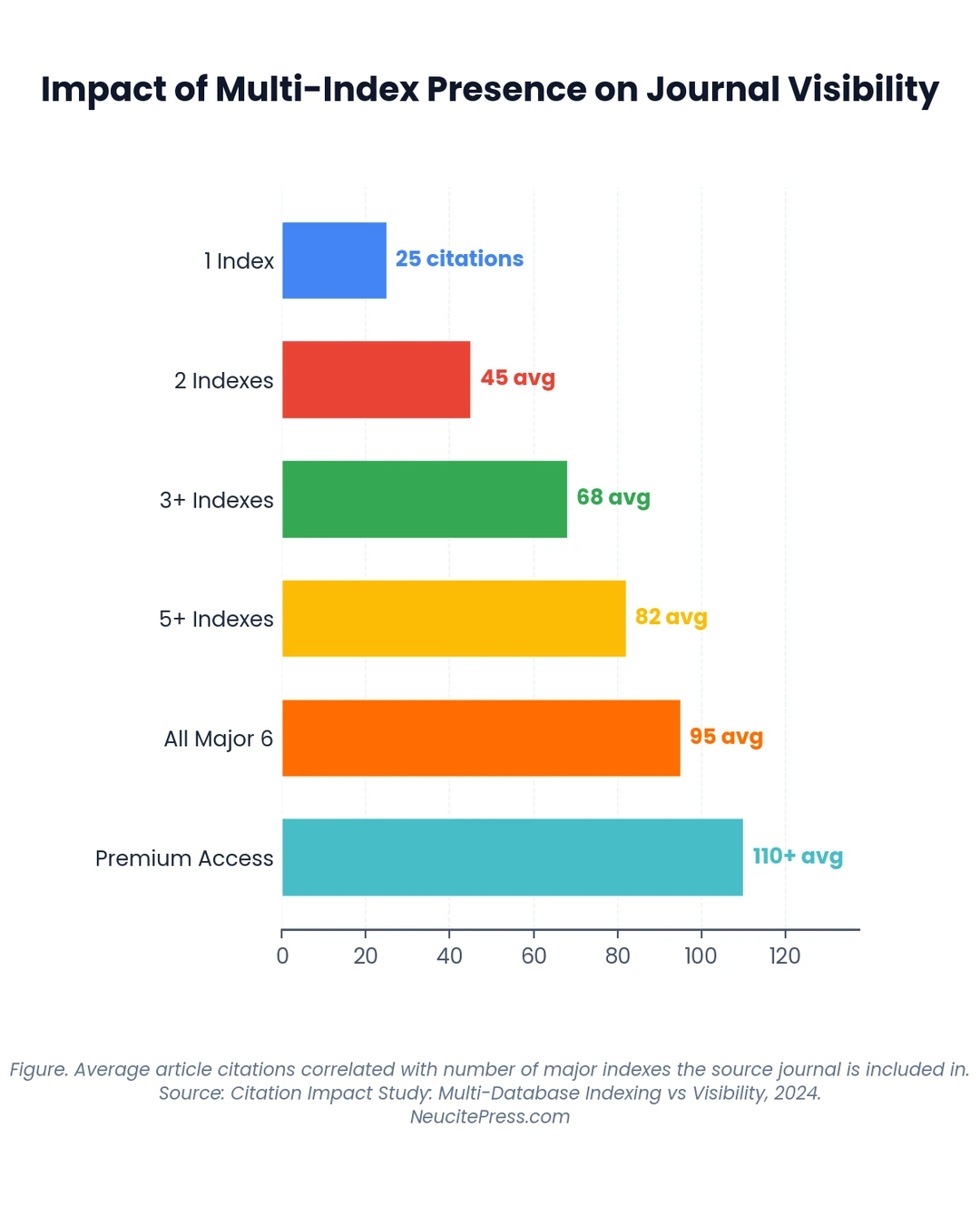
s help publishers understand intervention opportunities throughout the evaluation process.
Conclusion
Sustained visibility in academic databases demands continuous attention to technical and quality standards. We have outlined eight critical errors that can disrupt a publication’s presence in search results. Proper indexing is not a one-time task but an ongoing commitment.
Our resources provide a clear way to maintain your site‘s health. Regular audits of your website and content are essential. This proactive approach prevents most problems before they affect your search rankings.
For specific guidance, our comprehensive Google Scholar indexing checklist offers step-by-step support. It covers technical configurations and metadata alignment crucial for all academic websites.
Disclaimer: This article offers general guidance. For specific situations, consult with database representatives and legal advisors.
Download our templates, subscribe for updates, and share your success stories below. Your feedback helps us all improve the integrity of scholarly communication.
FAQ
What is the primary role of Google Search Console for a journal’s website?
Google Search Console is an essential tool that helps webmasters monitor a site’s presence in Google search results. It provides critical data on indexing status, search queries, and technical issues. We use it to ensure pages are properly crawled and to identify problems like server errors or manual penalties that could affect visibility.
How does duplicate content impact a journal’s search engine rankings?
Duplicate content confuses search engines like Google, making it difficult to determine which version of a page to rank. This can dilute a site’s authority and lead to lower rankings for key queries. We help clients implement canonical tags and manage content to avoid this common indexing issue.
What are the most critical technical checks using a robots.txt file?
The robots.txt file instructs search engine crawlers on which pages or resources to access. A misconfiguration can accidentally block important content from indexing. We verify that this file does not restrict critical pages, such as article archives or submission guidelines, which is vital for maintaining search engine presence.
Can issues with site speed lead to problems with Google indexing?
Yes, slow page load times negatively affect user experience and are a known ranking factor. If server response times are consistently poor, Googlebot may crawl fewer pages, potentially leaving valuable content out of the index. We analyze site performance to ensure it meets search engine standards.
What is the value of using SEO tools beyond Google Search Console?
While Search Console offers direct data from Google, other SEO tools provide competitive analysis, backlink tracking, and comprehensive site audits. These resources help us identify broader trends, technical SEO issues, and opportunities to improve a journal’s authority and search results performance.
How often should a journal’s website be audited for potential indexing problems?
We recommend a comprehensive SEO audit at least quarterly. Regular checks help catch new issues early, such as broken links from site changes or unexpected drops in indexed pages. For high-traffic sites with frequent content updates, more frequent monitoring may be necessary.