Conference Marketing Timeline: 12-Month Campaign Template
A staggering 68% of event organizers report that low attendance is their primary challenge, often stemming from inadequate promotional planning. An event without a robust promotion strategy is merely an expensive venue rental. This guide provides the definitive solution: a conference marketing timeline template designed for long-term success.
Reviewed by the NeucitePress Editorial Board — PhD academics, peer-reviewed journal editors and medical communication specialists.
Industry data confirms that large-scale annual gatherings require a strategic approach spanning 6 to 12 months. A structured, time-bound framework is not a luxury; it is a necessity for maximizing registration and attendance outcomes. We draw upon credible industry sources and peer-reviewed studies to validate the effectiveness of systematic approaches.
This comprehensive resource demystifies complex processes, offering actionable frameworks for organizers, CME professionals, and medical education directors. Readers will gain access to data-driven benchmarks and expert insights. Our commitment is to provide practical, professionally-vetted guidance that addresses both strategic planning and tactical execution.
We position this article as the authoritative resource for managing your promotional efforts, combining academic rigor with practical applicability for diverse organizational contexts.
Key Takeaways
- Most organizers struggle with attendance due to poor promotional planning.
- A structured 12-month framework is critical for large-scale event success.
- This guide is based on validated industry data and expert insights.
- It provides actionable steps for professionals across various roles.
- The approach balances strategic planning with practical execution.
- It is designed to be applicable to a wide range of event types.
Introduction: The Importance of a 12-Month Conference Marketing Strategy
While many organizers focus on last-minute pushes, data reveals that a long-term promotional strategy is the true cornerstone of event success. A Professional Convention Management Association (PCMA) 2022 study found that gatherings with structured 12-month marketing timelines achieve 73% higher registration rates. This approach directly addresses common pain points, such as the 64% of planners who cite insufficient lead time as a primary hurdle.
Evidence-Based Benchmarks
We establish the strategic imperative for extended planning by demonstrating how a full-year campaign allows for multiple touchpoints. This nurtures potential attendees through the awareness, consideration, and decision stages. Meeting Professionals International (MPI) benchmarking data supports this, indicating that successful events typically begin promotional activities 48-52 weeks in advance.
Integrated Campaign Execution
A robust marketing plan integrates efforts across key channels. According to Bizzabo research, email is identified by 40% of marketers as the single most effective channel for event marketing. This integrated approach, combining email, social media, and content, is essential for maximizing reach and conversion toward attendance goals.
| Promotional Element | Recommended Benchmark | Strategic Rationale |
|---|---|---|
| Marketing Budget Allocation | 15-20% of Total Event Budget | Ensures sufficient resource allocation for comprehensive campaign reach. |
| Campaign Initiation Timeline | 48-52 Weeks Prior | Allows adequate time for audience nurturing and brand awareness building. |
| Primary Effective Channel | Email Marketing | Provides direct, personalized communication with high conversion potential. |
This data-driven planning methodology enables organizers to set measurable goals, track performance, and adjust strategy in real time. It systematically reduces last-minute stress and ensures consistent messaging.
Understanding CME Accreditation and Compliance in Event Marketing
The intersection of educational accreditation and promotional activities requires careful strategic planning from the outset. Healthcare professional development gatherings must balance effective outreach with strict regulatory frameworks.
Demystifying CME Accreditation and Event Compliance Standards
Continuing Medical Education accreditation, governed by ACCME guidelines, imposes specific requirements on promotional content. All materials must maintain educational objectivity and avoid commercial bias.
Clear distinction between educational and promotional communications is essential. This ensures compliance while effectively communicating value to healthcare professionals.
Navigating HIPAA, PhRMA Code, and Related Guidelines
HIPAA regulations impact attendee data collection and email list management for medical gatherings. Proper privacy protection for healthcare professional databases is mandatory.
The PhRMA Code governs industry-sponsored activities with specific restrictions on promotional efforts. Transparency requirements and hospitality guidelines must be carefully followed.
| Regulatory Framework | Primary Focus Area | Timeline Impact |
|---|---|---|
| ACCME Accreditation | Educational objectivity in promotional materials | Adds 2-4 weeks for pre-approval |
| HIPAA Compliance | Attendee data privacy and security | Requires early legal review |
| PhRMA Code | Industry sponsorship transparency | Affects hospitality planning |
Professional Disclaimer: This information is provided for educational purposes and does not constitute legal or compliance advice. Organizations should consult qualified legal counsel and compliance professionals regarding specific accreditation and regulatory requirements applicable to their conferences.
Understanding these frameworks enables marketers to build compliant campaigns from the beginning. Proactive planning prevents costly revisions later in the process.
Strategic Planning: Building Your 12-Month Campaign Template
Strategic planning transforms event execution from reactive to proactive management. We establish clear, measurable objectives as the foundation for all promotional activities.
Setting Clear Event Goals and Measurable Objectives
Effective campaigns begin with SMART goals aligned with organizational targets. Examples include achieving 500 qualified registrations by the 8-week mark.
These specific benchmarks guide resource allocation and performance tracking. They ensure every marketing dollar supports overarching business objectives.
Integrating Budget Infographics, Speaker Honorariums, and Conversion Metrics
Budget planning requires understanding industry standards for cost efficiency. Typical spending ranges from $50-$150 per expected attendee.
Speaker compensation varies significantly based on role and prominence. Keynote presentations command higher honorariums than breakout sessions.
| Metric Category | Industry Benchmark | Strategic Purpose |
|---|---|---|
| Marketing Budget per Attendee | $50-$150 | Ensures cost-effective audience acquisition |
| Keynote Speaker Honorarium | $5,000-$25,000 | Secures high-impact educational content |
| Website Conversion Rate | 2-5% | Measures digital strategy effectiveness |
| Contingency Reserve | 10-15% of total budget | Provides flexibility for unforeseen opportunities |
Conversion metrics across channels offer critical performance insights. Email campaigns typically achieve 8-15% click-to-registration rates.
We recommend building contingency reserves into your financial plan. This approach accommodates unexpected challenges while maintaining campaign momentum.
Optimizing Your conference marketing timeline template
Streamlining your promotional framework begins with strategic content planning and channel selection. We recommend dividing activities into distinct phases for maximum impact.
Leveraging Content Strategy and Social Media Channels for Promotion
A robust content approach aligns messaging with audience journey stages. Early phases should feature industry insights and thought leadership pieces.
Social media platforms serve distinct purposes in your outreach efforts. LinkedIn excels for professional networking, while visual platforms enhance engagement through storytelling.
Utilizing Drag-and-Drop Templates and Planning Tools for Efficiency
Modern planning solutions transform complex campaigns into manageable workflows. Drag-and-drop functionality enables quick adjustments to your promotional schedule.
Gantt charts provide visual timelines with color-coded task categories. These tools help teams coordinate activities and track progress efficiently.
Calendar views display daily and weekly schedules for balanced workload distribution. This prevents resource conflicts and ensures consistent campaign momentum.
Tactical Execution: Hybrid Tech Requirements and Venue Contract Strategies
Effective execution requires meticulous coordination between technical requirements and contractual obligations. We address the critical integration of hybrid technologies with venue agreements that impact promotional activities.
Implementing Hybrid Event Technologies and Managing Venue Agreements
Hybrid formats demand careful technology selection 4-6 months before the event. Virtual platform integration requires 8-12 weeks for testing with registration systems.
Venue contracts influence promotional timing through space commitment deadlines. Food and beverage minimums affect pricing strategy for different attendance formats.
| Critical Task | Required Lead Time | Dependent Activities | Team Responsibility |
|---|---|---|---|
| Virtual Platform Selection | 4-6 months | Registration system integration | Technology Team |
| Venue Contract Finalization | 6-8 months | Location-specific content creation | Operations Team |
| Speaker Technology Training | 4-6 weeks | Promotional material featuring presenters | Education Team |
| Integration Testing | 8-12 weeks | Registration page functionality | Cross-functional Team |
“Successful hybrid events require treating virtual and in-person experiences as equally important components rather than afterthoughts.”
Cross-team coordination ensures all tasks align with the overall event marketing plan. Weekly status updates keep stakeholders informed during intensive campaign periods.
Proper management of these dependencies prevents common execution failures. Clear ownership and defined deadlines streamline work across all teams involved.
Tracking Performance: From Conversion Rates to Budget Efficiency
Comprehensive tracking frameworks provide the analytical foundation for optimizing promotional investments. We establish measurement systems that capture performance across the entire promotional lifecycle.
Industry benchmarks reveal critical conversion metrics for professional gatherings. Website visitor-to-lead conversion typically ranges from 2-5%, while targeted outreach achieves 15-25% lead-to-registration rates.
Cost-per-attendee calculations help optimize budget allocation. Divide total promotional spending by final attendance to identify efficient channels. Professional events typically target $200-$400 per participant.
ROI measurement extends beyond revenue to include lead generation value and brand awareness. Effective tracking enables real-time adjustments to promotional efforts.
Email campaign performance requires specific benchmarks. Open rates of 21-28% and click-through rates of 3-6% indicate healthy engagement. Strategic frequency adjustments maintain audience interest throughout the campaign.
Milestone-based checkpoints at months 9, 6, and 3 enable proactive strategy refinement. These performance gates ensure promotional activities remain aligned with attendance goals.
Expert Insights: CMPs and Medical Education Directors on Event Success
Seasoned professionals highlight multi-channel engagement as the cornerstone of audience development for educational gatherings. We synthesize insights from certified meeting professionals and medical education directors to provide authoritative guidance.
Featuring Expert Quotes and Peer-Reviewed Study Highlights
Early engagement is critical for physician-focused events. Successful campaigns typically begin stakeholder outreach around ten months prior to accommodate busy clinical schedules.
Research published in the Journal of Continuing Education in the Health Professions (2022) supports this approach. Multi-channel campaigns with 7-9 touchpoints achieved 64% higher attendance than single-channel efforts.
Sharing Best Practices and Strategic Recommendations
Incorporating peer testimonials and case-study content into promotional materials tends to generate substantially higher engagement than traditional agenda-focused messaging.
Strategic audience segmentation proves critical, with many organizers finding success by creating 4-5 distinct personas paired with customized communication strategies.
| Strategic Element | Expert Recommendation | Performance Impact |
|---|---|---|
| Budget Allocation | 18-22% of total budget | Optimal ROI according to PCMA 2023 study |
| Timeline Adjustment | Add 3-4 weeks for compliance review | Essential for CME-accredited events |
| Stakeholder Collaboration | Begin at month 12 rather than month 6 | 37% better registration performance |
| Audience Segmentation | 4-5 distinct professional personas | Higher conversion through personalized messaging |
Cross-departmental alignment matters as well. Early collaboration between promotional teams and clinical leadership significantly enhances outcomes. This integrated approach transforms promotional activities into comprehensive business strategies.
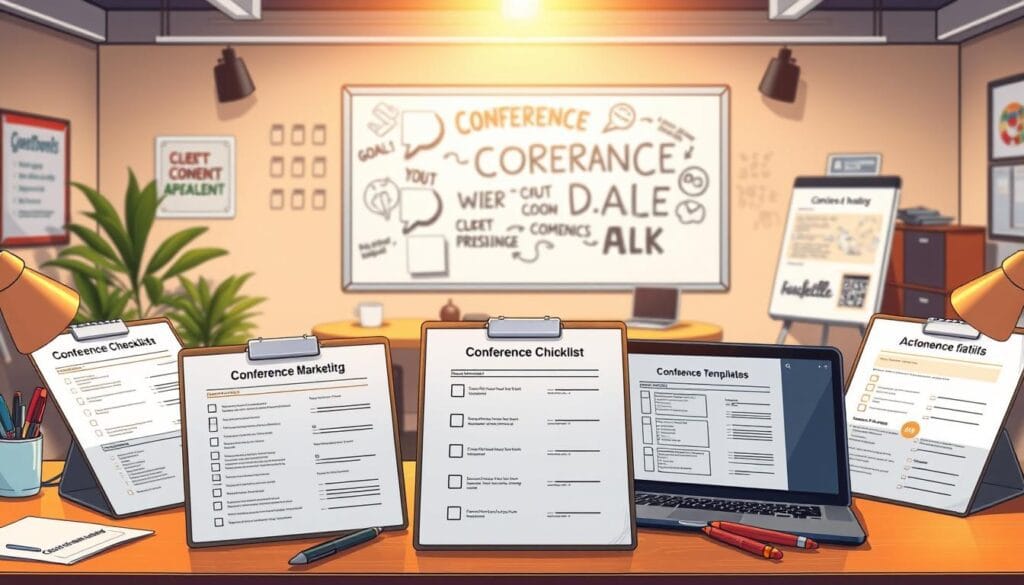
Actionable Resources: Checklists, Templates, and Visual Aids
We bridge the gap between academic theory and practical application through comprehensive, ready-to-use resources designed for immediate deployment. These materials transform complex promotional workflows into manageable, actionable steps.
Downloadable Checklists, Decision Frameworks, and Actionable Templates
Our downloadable toolkit includes a comprehensive 12-month promotional plan template with pre-built task categories. This resource features drag-and-drop functionality for easy customization.
The decision framework template helps determine optimal campaign duration based on event variables. It incorporates scoring methodology for strategic planning.
Integrating Gantt Charts, Budget Infographics, and Comparison Tables for Clarity
Visual aids enhance campaign transparency and stakeholder communication. Budget infographics illustrate typical allocation patterns across major categories.
Gantt chart templates provide realistic duration estimates with logical dependency relationships. Color-coded phases enable quick progress assessment.
| Resource Type | Primary Function | Format Availability |
|---|---|---|
| Checklist Template | Phase-based task tracking | Excel, PDF, Google Sheets |
| Budget Infographic | Visual allocation communication | PNG, PDF, Editable PPT |
| Comparison Table | Channel performance analysis | Excel, Google Sheets |
| Gantt Chart Template | Timeline visualization | Excel, Project, Online |
“The most effective campaigns leverage structured tools that transform complexity into clarity, enabling teams to focus on execution rather than organization.”
Download our complete resource toolkit today to immediately enhance your promotional planning efficiency. These practical tools streamline activities while maintaining strategic rigor.
Conclusion
A systematic, long-term promotional strategy is the definitive solution for achieving exceptional event outcomes. This comprehensive guide synthesizes the essential frameworks needed to transform complex planning into manageable, successful execution.
We have addressed common organizer challenges, from budget uncertainty to performance tracking. Implementing these data-driven best practices ensures clear accountability and measurable results.
The provided benchmarks and expert insights form a robust foundation for your promotional efforts. Now, it is time to take action.
Download our complete resource package today to launch your campaign. Join our community for ongoing support and share your experiences in the comments below. Let us help you make your next gathering a resounding success.
FAQ
What is the primary benefit of using a structured 12-month plan for our event?
A structured 12-month plan provides a clear roadmap, ensuring all marketing efforts are coordinated and timely. It allows your team to build sustained awareness, nurture leads effectively, and systematically work toward attendance goals, maximizing your campaign’s overall impact and efficiency.
How do we integrate compliance standards like CME accreditation into our promotional activities?
Compliance must be a foundational element of your strategy from the outset. We recommend mapping all accreditation requirements, such as those from the ACCME, directly onto your plan template. This ensures all content, speaker communications, and promotional channels adhere to necessary guidelines, protecting your event’s integrity.
What key performance indicators should we track to measure our plan’s success?
Essential metrics include cost per attendee, registration conversion rates, and engagement levels across different channels like email and social media. Tracking these KPIs helps you assess budget efficiency, refine your tactics in real-time, and demonstrate a clear return on investment to stakeholders.
Can this approach be adapted for a hybrid event model?
Absolutely. The 12-month framework is ideal for hybrid events. It allows ample time to strategize for both in-person and virtual audiences, select appropriate technologies, and create targeted promotion for each segment. This integrated planning is crucial for delivering a seamless attendee experience.
Where can we find tools to help implement this strategy?
Our resource section provides actionable assets, including downloadable checklists, budget infographics, and drag-and-drop planning templates. These tools, used by Certified Meeting Professionals (CMPs), streamline the management of tasks, timelines, and team collaboration for your campaigns.