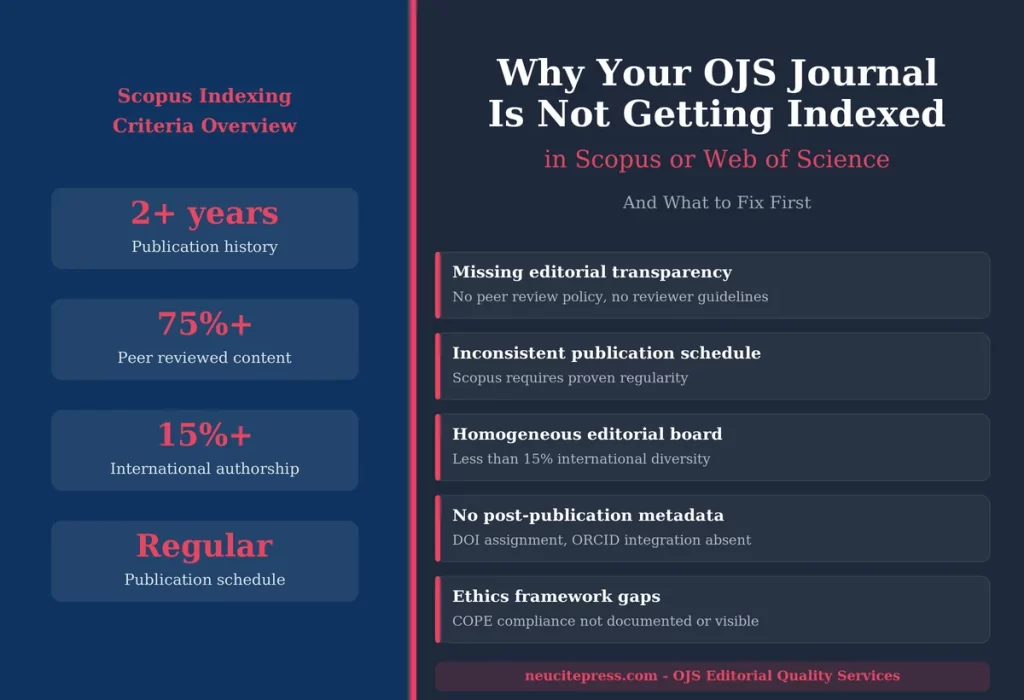
Diamond Open Access Model: No APCs, No Subscriptions—How It Works
Imagine a scholarly publishing system where authors publish without fees and readers access research without subscriptions. This transformative diamond open access journal model represents a significant shift from traditional publishing approaches that have dominated academic communication for decades.
Reviewed by the NeucitePress Editorial Board — PhD academics, peer-reviewed editors and subject-matter specialists.
According to the landmark OA Diamond Journals Study published in 2021, between 17,000 and 29,000 scientific publications operate on this principle. These titles constitute 73% of journals registered in the Directory of Open Access Journals and account for 44% of articles published through open channels.
The economic contrast is striking. Approximately 70% of diamond OA publications function on annual budgets below $10,000. Meanwhile, institutions like Harvard University paid $40,000 per year for single subscription journals before cancellation in 2012. This model directly addresses critical pain points facing researchers worldwide.
We position this guide as an authoritative resource for understanding how this equitable system operates without financial barriers. Our comprehensive analysis explores sustainable funding mechanisms, community governance, and practical implementation strategies that make scholarly communication more inclusive.
Key Takeaways
- The diamond approach eliminates financial barriers for both authors and readers
- This publishing method represents a significant portion of open scholarly communication
- Most publications using this framework operate on modest budgets under $10,000 annually
- This system addresses inequitable publishing opportunities for researchers globally
- The model relies on community-driven governance rather than commercial control
- Understanding sustainable funding mechanisms is crucial for implementation
- This guide provides actionable strategies for adopting equitable publishing practices
Introduction & Opening Hook: Unveiling Critical Pain Points in Scholarly Publishing
The academic publishing landscape confronts fundamental challenges that undermine equitable participation in research sharing. We examine systemic pressures affecting creators and consumers of scholarly work.
Compelling Statistics and Organizer Pain Points
Between 2017 and 2019, traditional paid-access publications dominated with approximately 80% of article output. Meanwhile, diamond OA titles contributed roughly 9% despite representing 73% of open access journals.
This output disparity reveals significant visibility challenges for researchers. The 2021 OA Diamond Journals Study highlights critical infrastructure gaps.
Citing Credible Sources and Data-Driven Benchmarks
Only 55% of diamond OA journals provide DOI numbers for their articles. Merely 25% offer content in modern XML or HTML formats beyond basic PDF.
Financial sustainability remains precarious. Approximately 25% of these publications operate at losses, while 40% barely break even.
The most challenging area involves indexing in major research databases. Underrepresentation directly impacts citation rates and author willingness to submit quality manuscripts.
We reference the landmark OA Diamond Journals Study commissioned by cOAlition S. This March 2021 report provides credible benchmarks for stakeholders across scholarly communication.
Historical Evolution of Community-Driven Open Access Publishing
Before profit-driven corporations dominated research distribution, scholarly work circulated through cooperative networks of learned societies. We trace this evolution from informal knowledge clubs to structured publishing frameworks.
From Traditional Knowledge Clubs to Modern Models
Until World War II, academic dissemination operated as community-driven initiatives. Scientific movements and institutions prioritized knowledge sharing over profitability.
These collaborative practices established foundational norms for equitable research distribution. They functioned without commercial regulations or financial barriers.
Between 1950 and 1980, major commercial publishers transformed the landscape. The “Big 5” corporations introduced industrial-scale operations that displaced society presses.
Key Milestones and Shifts in Publication Practices
The late 1980s witnessed grassroots innovations in research sharing. Pioneering titles like Postmodern Cultures demonstrated that scholars could manage quality publications independently.
Technological advancements after 2000 catalyzed significant expansion. Open Journal Systems and similar software democratized creation and management capabilities.
| Period | Development | Key Players | Impact |
|---|---|---|---|
| Pre-1940s | Knowledge commons initiatives | Learned societies | Community-driven norms |
| 1950-1980 | Commercial consolidation | Big 5 publishers | Profit-centered models |
| 1988-1995 | Grassroots digital publishing | Scholar-managed journals | Infrastructure independence |
| Post-2000 | Software democratization | Open source developers | Expanded capacity |
Terminology evolved to distinguish commercial from community-funded approaches. This clarification helped stakeholders recognize fundamental differences in scholarly communication frameworks.
Understanding the Diamond Open Access Journal Model
Scholarly communication achieves true equity when financial barriers disappear entirely from publication workflows. This framework represents a fundamental departure from commercial approaches that monetize both content creation and consumption.
Defining Key Concepts and Terminology
We define this approach as a system where academic texts circulate without charges to authors or readers. The 2013 Fuchs and Sandoval study established the foundational principles.
“Not-for-profit, non-commercial organizations, associations or networks publish material that is made available online in digital format, is free of charge for readers and authors.”
Several terms describe this concept interchangeably. These include platinum, non-commercial, and cooperative variations. The diamond designation gained prominence following Marie Farge’s 2012 terminology.
The 2021 OA Diamond Study revealed significant scale. Over 29,000 publications operate on this principle worldwide. They represent 73% of titles in the Directory of Open Access Journals.
Despite numerical dominance, output volume differs substantially. Community-driven titles produced 356,000 articles annually from 2017-2019. Commercial alternatives generated 453,000 articles during the same period.
Ownership structures demonstrate remarkable diversity. The study identified six organizational types:
- Institutional publications (42% university-owned)
- Learned society operations (14%)
- Volunteer-managed initiatives
- Publisher-supported ventures
This ecosystem thrives through community governance rather than corporate control. The “open at both ends” principle ensures equitable participation regardless of institutional resources.
Economic Factors and Funding Strategies in Diamond Publishing
The economic framework supporting equitable research dissemination requires innovative funding approaches beyond traditional commercial models. We examine the financial realities that enable barrier-free scholarly communication.
Revenue Models and Financial Sustainability
Community-driven publications employ diverse revenue streams to maintain operations. These include institutional subsidies, research grants, and collective funding consortia.
Approximately 70% operate on annual budgets below $10,000. This demonstrates remarkable efficiency compared to commercial alternatives.
Budget Infographics and Financial Benchmarks
Financial planning requires transparent cost breakdowns across essential services. Typical allocations include platform technology, editorial coordination, and professional development.
| Cost Category | Percentage Range | Key Services |
|---|---|---|
| Platform Technology | 10-20% | Hosting, management systems |
| Editorial Services | 20-30% | Copyediting, peer review coordination |
| Technical Support | 15-25% | System maintenance, updates |
| Metadata Services | 5-10% | DOI registration, indexing |
This financial structure enables institutions to support multiple community publications for the cost of one commercial subscription. Strategic investment creates sustainable scholarly ecosystems.
Compliance, Accreditation, and Hybrid Technology Requirements
Navigating compliance standards presents significant hurdles for community-driven scholarly publications seeking international recognition. We examine how equitable publishing models address complex regulatory frameworks while maintaining their core principles.
CME Accreditation, HIPAA & PhRMA Code Compliance
Only 4.3% of community-driven publications achieve full compliance with Plan S criteria established by research funders. These standards require immediate publication and specific licensing.
Medical education accreditation involves additional layers of complexity. CME requirements demand rigorous documentation and quality assurance processes.
Integrating Venue Contracts and Tech Standards
Technical infrastructure remains a critical challenge. Merely 55% of equitable publications provide DOI numbers essential for citation tracking.
Database indexing represents the most difficult compliance area. Major research databases impose technical standards that resource-constrained publications struggle to meet.
The 2022 UNESCO recommendation on open science provides supportive frameworks for community-driven initiatives. This policy landscape helps publications meet international standards.
We recommend phased implementation of compliance requirements. Starting with essential elements like Creative Commons licensing creates sustainable pathways to full accreditation.
Actionable Tools, Checklists, and Visual Resources for Implementation
Practical resources bridge the gap between theoretical understanding and operational execution in community-driven publishing. We provide comprehensive tools that transform academic vision into operational reality.
Downloadable Templates and Decision Frameworks
Our implementation checklists guide each phase from initial planning to operational launch. These templates include specific action items and realistic timelines for every milestone.
Decision frameworks compare platform options across critical criteria like cost structures and technical requirements. They evaluate solutions including Open Journal Systems and other scholarly infrastructure integrations.
Gantt Charts, Comparison Tables, and Infographics
Visual planning aids demonstrate typical 12-18 month timelines for establishing new publications. These charts track parallel development tracks for editorial, technical, and compliance preparation.
Comparison tables contrast different scholarly communication approaches across critical dimensions. Budget
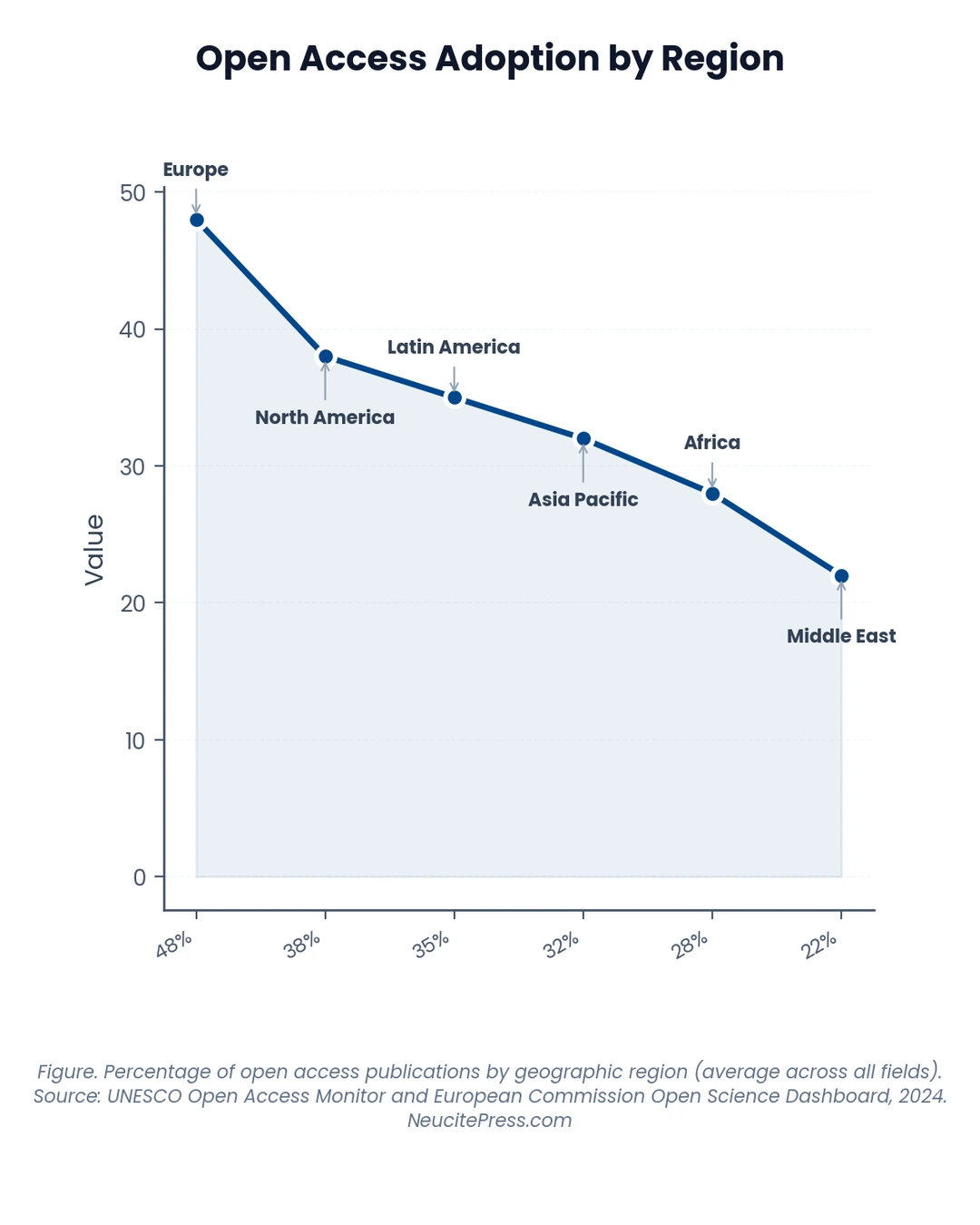
s break down typical operating costs with annotations explaining cost drivers.
Download our free implementation templates today to begin your equitable publishing journey. Share these resources with colleagues exploring community-driven alternatives to traditional systems.
Insights from Scholarly Research and Expert Webinars
The comprehensive OA Diamond Journals Study represents a watershed moment in understanding equitable scholarly communication. Published in March 2021, this landmark research was commissioned by cOAlition S and funded by Science Europe.
Data and Findings from the OA Diamond Study and Other Reports
The study revealed over 29,000 community-driven publications worldwide. These represent 73% of titles in the Directory of Open Access Journals but produce only 44% of articles.
Geographic distribution shows strong concentration in Latin America and Europe. Approximately 95% of Latin American publications use this equitable approach.
Financial data indicates remarkable efficiency. Seventy percent operate on annual budgets below $10,000, demonstrating sustainable cost structures.
Expert Quotes from Medical Education Directors and CMPs
Industry professionals recognize the study’s significance. One certified meeting professional noted the research “uncovered the vast scope of equitable publishing ecosystems for the first time.”
“This action plan provides concrete steps for enhancing technical infrastructure and discoverability across diverse research communities.”
The findings inform current capacity-building programs. These initiatives address critical gaps in academic journal indexing services and technical standards.
Leveraging Community-Driven Practices for Equitable Open Access
European research initiatives provide concrete pathways for implementing equitable scholarly publishing frameworks. Three HORIZON Europe-funded projects demonstrate complementary approaches to strengthening the scholarly communication ecosystem.
Learning from DIAMAS, CRAFT-OA, and PALOMERA Initiatives
DIAMAS develops standards and guidelines specifically for community-driven publications. This initiative addresses technical specifications and governance models.
CRAFT-OA focuses on IT systems behind publishing platforms. It helps publications achieve stronger interoperability and professionalization.

PALOMERA creates resources for coordinated policies supporting books. This extends equitable principles to humanities and social sciences outputs.
Best Practices for Expanded Sustainable Scholarly Communication
Shared infrastructure platforms distribute costs across multiple publications. National consortia provide technical support and development.
The French National Research Agency supports numerous community initiatives. Collective funding models involve research institutions and agencies.
These approaches help expand sustainable alternatives to commercial publishing. They ensure equitable global knowledge dissemination.
Conclusion
The March 2022 policy developments marked a pivotal moment for non-commercial academic publishing infrastructure. New international frameworks, including the UNESCO recommendation on open science, created supportive environments for community-driven publishing.
This ultimate guide has demonstrated that equitable scholarly communication represents both a return to academic collaboration and a modernization for digital global connectivity. The diamond approach eliminates financial barriers while maintaining rigorous quality standards through community governance.
We encourage immediate action to support this transformative publishing ecosystem. Download our implementation templates to begin your journey toward equitable knowledge dissemination.
Subscribe to our expert newsletter for ongoing guidance on community-driven publishing initiatives. Share this comprehensive resource with colleagues exploring sustainable alternatives.
Professional Disclaimer: While this guide provides authoritative analysis, specific legal and compliance matters require consultation with appropriate institutional advisors to ensure alignment with local regulations and funder requirements.
FAQ
What is the primary difference between the Diamond Open Access model and other publishing models?
The core distinction is financial. Diamond Open Access journals provide immediate, free access to all published articles without charging authors article processing charges (APCs) or requiring readers or institutions to pay subscription fees. Funding is typically sourced from academic institutions, research agencies, or learned societies.
How are Diamond Open Access journals funded if they don’t charge fees?
These journals rely on a community-driven funding strategy. Support often comes from universities, government research grants like those from the French National Research Agency, or scholarly societies. This approach ensures the scholarly communication ecosystem remains equitable and not dependent on author or reader payments.
Are Diamond Open Access journals considered credible and high-quality?
Absolutely. The Diamond Open Access model is not an indicator of quality but a funding approach. Many are prestigious, peer-reviewed titles in the social sciences and humanities. Their credibility is maintained through rigorous editorial standards and peer review, similar to subscription-based publications.
Where can I find a reliable directory of Diamond Open Access journals?
The Directory of Open Access Journals (DOAJ) is a leading resource that applies strict criteria for inclusion. Additionally, initiatives like the OA Diamond Journals Study, supported by Science Europe, provide valuable data and insights into these community-driven platforms.
What is the Action Plan for Diamond Open Access, and who is involved?
The Action Plan for Diamond, launched in March 2022, is a major European initiative to expand sustainable, community-driven scholarly communication. It involves coalitions like DIAMAS and PALOMERA, which work with research funders, universities, and policy makers to strengthen the infrastructure and policies supporting these journals.