
Pharmaceutical Conference Planning: Compliance & Best Practices Guide
Nearly 70% of medical event organizers report compliance challenges as their top concern. This comprehensive framework addresses the critical intersection of regulatory requirements and strategic execution in today’s highly regulated healthcare environment.
Reviewed by the NeucitePress Editorial Board — PhD academics, peer-reviewed journal editors and medical communication specialists.
We establish this resource as the definitive reference for professionals navigating complex industry standards. The landscape demands meticulous attention to detail while balancing stakeholder engagement and measurable outcomes.
Our expertise helps medical affairs teams and event professionals optimize budgets while maintaining regulatory adherence. This approach delivers proven methodologies for successful outcomes in specialized gatherings.
The scope covers essential components including CME accreditation, technology integration, and KOL engagement strategies. We reference established standards from organizations like ACCME, PCMA, and MPI while addressing frameworks including HIPAA and PhRMA Code.
This guide provides actionable solutions for common challenges like fragmented processes and budget constraints. It complements our broader strategies for tracting attendees and increasing visibility for your academic.
Key Takeaways
- Compliance remains the primary concern for 70% of medical event organizers
- Strategic planning balances regulatory requirements with stakeholder engagement
- Industry standards from ACCME, PCMA, and MPI provide essential frameworks
- Budget optimization and KOL engagement are critical success factors
- Actionable methodologies address fragmented processes and compliance concerns
- Technology integration enhances both efficiency and regulatory adherence
- Measurable outcomes demonstrate return on investment for specialized gatherings
Introduction: Setting the Stage for Successful Pharma Events
American Express Meetings & Events reveals in their 2024 report that the gap between invitation volume and actual attendance creates significant operational hurdles. This disconnect represents a fundamental challenge facing today’s medical gatherings.
Compelling Industry Statistics and Pain Points
Physicians receive approximately 16 meeting invitations during congresses but attend only 50% of them. Meanwhile, companies participate in 20+ annual events, creating immense resource allocation pressures.
The primary challenges include fragmented KOL management systems and complex compliance reporting. Budget constraints compound these issues, with rising costs per attendee straining financial resources.
Many organizations invest heavily in premium exhibition space and executive time. Yet they often leave events feeling they barely accessed potential opportunities due to inadequate preparation.
Opening Hook with Credible Source Insights
The difference between average and exceptional outcomes consistently relates to three critical elements. Strategic pre-event preparation, efficient time management, and technology that reduces administrative burdens prove essential.
We establish systematic approaches that move beyond traditional methods. Our evidence-based methodologies address compliance while maximizing engagement and strategic results for all participants.
Understanding CME Accreditation and Compliance in Pharma Conferences
Three primary regulatory frameworks govern pharmaceutical-supported educational activities: ACCME standards, HIPAA privacy rules, and PhRMA Code guidelines. We demystify these complex requirements to provide clear guidance for healthcare event professionals.
Demystifying CME Accreditation and Regulatory Guidelines
The ACCME’s Standards for Integrity and Independence establish critical boundaries between education and promotion. These guidelines ensure commercial support does not influence educational content.
We clarify the accreditation process for Continuing Medical Education events. This includes disclosure requirements for financial relationships and mechanisms to prevent commercial bias.
Proper event management systems must track compliance features automatically. This includes Sunshine Act reporting and audit trail documentation.
Compliance Essentials: HIPAA and PhRMA Code Considerations
Healthcare professionals need clear understanding of permissible activities under current regulations. The PhRMA Code specifies appropriate venues, meal standards, and documentation requirements.
Key compliance considerations include:
- HIPAA privacy protections for attendee information
- PhRMA Code guidelines for practitioner interactions
- Sunshine Act reporting for value transfers
This knowledge helps bridge the gap between marketing objectives and educational integrity. Specialized expertise in both event management and healthcare compliance ensures successful execution.
This guide provides general information about pharmaceutical conference planning and compliance considerations. It does not constitute legal advice. Organizations should consult with qualified legal counsel and compliance professionals to ensure adherence to all applicable regulations and industry codes.
Pharmaceutical Conference Planning Guide: Essential Strategies for Engagement
Industry data demonstrates that well-executed engagement strategies can increase attendee conversion rates by up to 40% in specialized medical gatherings. We establish measurable frameworks that transform participant interactions into meaningful outcomes.
Data-Driven Benchmarks: Cost per Attendee and Conversion Metrics
Successful medical events rely on precise financial planning and performance tracking. Our analysis reveals consistent patterns across high-performing gatherings.
| Metric Category | Standard Range | High-Performance Target | Industry Source |
|---|---|---|---|
| Cost per Attendee | $500-$2,000 | Below $750 | Medical Events Benchmark 2024 |
| Speaker Honorariums | $1,500-$5,000 | Tier-based Structure | KOL Engagement Study |
| Conversion Rates | 15-25% | 25%+ | Pharma Marketing Analytics |
| Content Engagement | 60-75% | 80%+ | Digital Interaction Reports |
Engaging KOLs and HCPs for Maximum Impact
Key Opinion Leaders significantly influence event reach and audience interest. We recommend beginning outreach six months before the gathering.
Our mapping process identifies experts through publication records and clinical involvement. This creates authentic relationships rather than transactional interactions.
Healthcare Professional engagement drives long-term value beyond single events. Personalized invitations and exclusive sessions build lasting connections.
Effective strategies integrate both KOL and HCP approaches within a cohesive framework. This delivers educational value while achieving legitimate commercial objectives.
Leveraging Technology and Hybrid Solutions for Effective Event Management
The evolution of hybrid event formats demands sophisticated technology platforms that bridge physical and virtual attendance seamlessly. We identify systems capable of managing multiple presenters while maintaining engagement parity across all participation methods.
Hybrid Technology Requirements and Virtual Session Tools
Platforms like Livestorm demonstrate how modern technology simplifies complex gatherings. These solutions accommodate numerous presenters and concurrent sessions with intuitive setup processes.
Registration pages and automated follow-up sequences streamline attendee engagement. Interactive features such as polls, live chat, and breakout rooms enhance virtual session experiences significantly.
Specialized systems address industry-specific compliance needs effectively. ExtendMed’s Health Expert Connect™ platform exemplifies this approach with robust data management capabilities.
| Feature Category | Livestorm | ExtendMed Health Expert Connect™ |
|---|---|---|
| Compliance Reporting | Basic tracking | Advanced Sunshine Act documentation |
| Engagement Tools | Polls, chat, breakout rooms | KOL segmentation, personalized invites |
| Scheduling Integration | Calendar synchronization | Complex multi-session coordination |
| Data Management | Standard attendee tracking | CSV/Excel import, centralized storage |
Streamlining Scheduling and Real-Time Insights
Automated invitation systems reduce administrative burdens substantially. Real-time attendance tracking provides immediate insights for compliance reporting and resource allocation.
These platforms integrate seamlessly with existing CRM and marketing systems. This connectivity ensures smooth data flow throughout the entire event management lifecycle.
We recommend evaluating specialized tools and platforms that address specific medical gathering requirements. The right technology selection directly impacts participant satisfaction and future attendance rates.
Optimizing Venue Contracts and Budget Management
Effective budget management begins with understanding typical cost distributions across major event categories and establishing clear financial parameters. Our approach demystifies complex contract negotiations while ensuring alignment with strategic objectives.
Negotiating Contracts and Visualizing Budget Infographics
Venue selection requires careful evaluation of location accessibility and space configuration. We recommend comparing proposals from multiple venues to secure optimal value.
Budget allocation follows predictable patterns across successful medical gatherings. This framework provides realistic benchmarks for financial planning.
| Budget Category | Standard Allocation | High-Performance Range | Key Considerations |
|---|---|---|---|
| Venue & Catering | 35% | 30-40% | Food minimums, room blocks |
| Speaker Fees | 20% | 15-25% | Honorarium structures |
| Technology & AV | 15% | 10-20% | Hybrid capabilities |
| Marketing & Materials | 15% | 10-20% | Promotional reach |
| Staffing & Logistics | 10% | 8-12% | Team coordination |
| Contingency Reserve | 5% | 3-7% | Risk mitigation |
“Successful contract negotiations balance firm financial boundaries with collaborative vendor relationships. The most effective agreements protect organizational interests while fostering long-term partnerships.”
Visual budget

s help stakeholders quickly grasp resource distribution. These tools enable informed decisions without compromising quality standards.
Regular team reviews monitor expenses against projections throughout the event process. Early variance identification allows timely corrective actions.
Actionable Checklists, Templates, and Decision Frameworks
Our research identifies structured approaches that significantly reduce preparation time while improving outcomes for healthcare events. We provide comprehensive tools that streamline the entire process from initial development through post-event analysis.
Downloadable Templates for Event Planning
We offer specialized templates designed for medical industry gatherings. These include KOL tracking spreadsheets, budget worksheets, and compliance documentation forms.
Each resource addresses specific challenges in managing complex events. They provide standardized formats that ensure consistency across all team members.
Step-by-Step Checklists for Pre-Event Preparation
Our checklists organize tasks by timeline with clear action items. The six-to-twelve month phase covers venue selection and budget approval.
The three-to-six month stage focuses on speaker confirmations and system setup. Final preparations include team briefings and technology testing.
Decision-Making Frameworks for Successful Conferences
We provide frameworks for common dilemmas like format selection and resource allocation. These tools help teams make informed choices based on specific objectives.
Our approach aligns with industry best practices from organizations like AMGA’s campaign toolkit. Download our comprehensive templates to streamline your next event planning process.
Integrating Expert Insights and Credible Source Citations
Industry leaders consistently emphasize that authentic expertise separates successful medical gatherings from standard industry events. We integrate perspectives from certified meeting professionals and medical education directors throughout this resource.
Expert Quotes from CMPs and Medical Education Directors
Amy Ravi, CEO of ExtendMed, shares valuable insights from working with global pharma companies. “We recently worked with a global oncology-focused biopharmaceutical company to optimize their engagement strategy,” she explains.
“Personalization is how companies stand out when thought leaders receive numerous requests.” This approach demonstrates the power of targeted engagement strategies.
Ravi provides another compelling example: “Imagine connecting with 4,000 potential attendees using only 10 staff members. Focusing on top priority contacts creates significant advantage.”
Citing ACCME, PCMA, MPI Guidelines and Peer-Reviewed Studies
We reference authoritative guidelines from leading organizations to ensure credibility. The ACCME establishes Standards for Integrity and Independence in accredited education.
PCMA research informs event strategy with data on engagement patterns and ROI measurement. This information helps professionals justify investments to leadership.
MPI guidelines cover safety, accessibility, and professional standards. These resources provide essential frameworks for quality healthcare gatherings.
Peer-reviewed studies from journals like Journal of Continuing Education in the Health Professions supplement this knowledge. This comprehensive approach transforms abstract requirements into actionable strategies for optimizing data-driven approaches.
Maximizing Onsite Engagement and Strategic Scheduling at Congresses
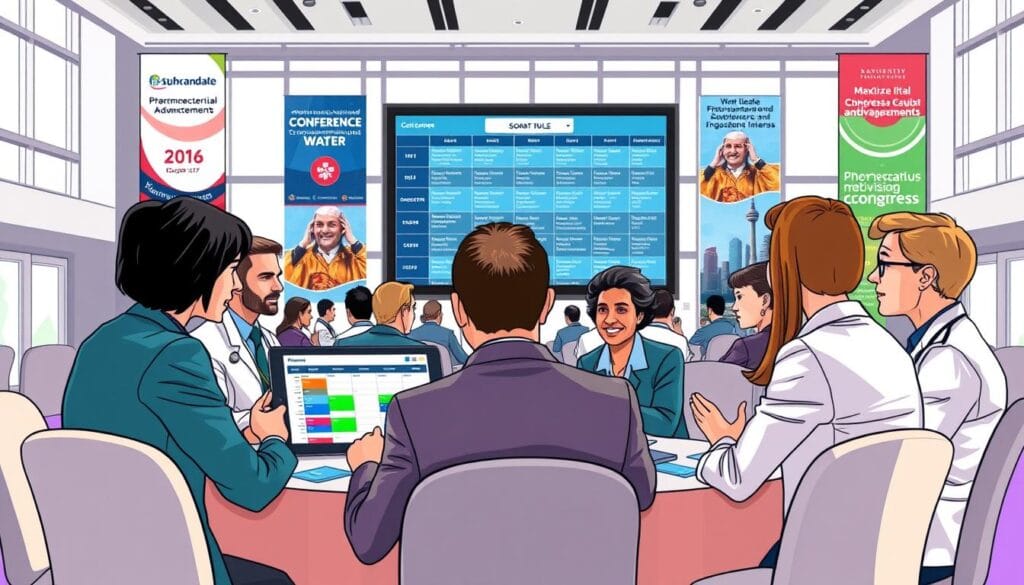
Medical congress success requires moving beyond generic networking to targeted, value-driven interactions. We establish frameworks where every team member’s presence contributes meaningfully to strategic objectives.
Optimizing Onsite Presence with Targeted Schedules
Effective resource allocation assigns personnel to specific sessions based on therapeutic expertise. Our approach creates individual schedules for each team member, from executives to medical affairs professionals.
Technology platforms enable real-time schedule optimization throughout the event. This ensures balanced coverage between booth duties and high-value investigator meetings.
| Time Block | Primary Focus | Team Allocation | Strategic Value |
|---|---|---|---|
| Morning Sessions | Scientific Presentations | Medical Affairs | Clinical Intelligence |
| Mid-Day | KOL Meetings | Executive Team | Relationship Building |
| Afternoon | Booth Coverage | Marketing Team | Audience Engagement |
| Evening | Networking Events | Cross-Functional | Strategic Connections |
| Flex Time | Spontaneous Opportunities | All Team Members | Unexpected Insights |
Resource Allocation and Live Engagement Techniques
Success hinges on quality conversations with priority experts rather than quantity metrics. Our methodology focuses teams on gathering specific insights from carefully selected investigators.
Pre-event briefings ensure mastery of key messages and clinical data. This preparation transforms brief interactions into meaningful exchanges that shape product strategy.
Daily coordination meetings allow strategy adjustments based on emerging opportunities. This dynamic approach maximizes the value of limited onsite time.
Conclusion: Your Pharmaceutical Conference Planning Roadmap to Success
The journey toward exceptional healthcare events culminates in a comprehensive framework that transforms logistical challenges into strategic advantages. We have established a systematic approach integrating compliance, engagement, and technology.
Successful outcomes require early team preparation with clear goals. Strategic resource allocation maximizes limited time during industry gatherings. Technology platforms enhance the entire process while ensuring regulatory adherence.
Future trends point toward hybrid formats and AI-powered networking. These developments will further optimize attendee experience and content delivery. Our methodologies position your company for continued success.
Download our complete event planning toolkit including templates and checklists. Subscribe for ongoing updates on industry best practices. Share this resource with colleagues across your organization.
This guide provides educational information about event management and compliance considerations. It does not constitute legal or regulatory advice. Consult qualified professionals to ensure adherence to applicable regulations.
FAQ
What are the primary compliance regulations we must consider for our event?
The key regulations include adherence to ACCME Standards for Integrity and Independence, the PhRMA Code on Interactions with Healthcare Professionals, and HIPAA for patient data privacy. We also ensure all activities align with the FDA’s guidelines on promotional communications.
How can we effectively engage Key Opinion Leaders (KOLs) and HCPs?
Engagement starts with early involvement in agenda development and offering meaningful roles, such as leading sessions or roundtables. Utilizing a sophisticated event management platform facilitates seamless communication and scheduling, maximizing their participation and impact.
What technology is essential for a successful hybrid meeting format?
A robust platform supporting high-quality streaming, interactive tools like live Q&A and polling, and secure login portals is critical. This technology must integrate registration data with CRM systems to provide real-time analytics on attendee engagement for both virtual and in-person audiences.
What strategies optimize budget management and venue contracts?
We recommend detailed budget visualization tools to track expenses against goals. For venues, negotiate clauses for attrition, cancellation, and force majeure. Leveraging industry connections often provides access to preferred rates and more flexible terms.
How do we measure the success and value of our industry events?
Success metrics extend beyond attendance. We analyze post-event surveys for knowledge gain, track engagement metrics across sessions, and measure lead generation for the sales team. The ultimate goal is demonstrating a clear return on investment for the company.
What are the best practices for onsite engagement at large congresses?
Develop targeted schedules for team members to maximize coverage of key sessions and networking opportunities. Allocate resources strategically for booth design and live engagement techniques, ensuring your company stands out and fosters valuable professional connections.
