Conference Volunteer Management: Recruit, Train & Retain Guide
Events generate 29% of yearly revenue for associations, making them critical for financial stability. Recent budget cuts have transformed volunteer support from nice-to-have to essential. These dedicated individuals enable organizations to expand their workforce without additional costs.
Reviewed by the NeucitePress Editorial Board — PhD academics, peer-reviewed editors and subject-matter specialists.
We provide authoritative conference volunteer management tips to address this challenge. Our framework covers six core areas: engagement strategies, recruitment best practices, compliance requirements, actionable templates, training techniques, and appreciation methods. This comprehensive approach helps event organizers deliver exceptional experiences despite staffing constraints.
The impact extends beyond immediate event support. Volunteers are twice as likely to donate compared to other prospects, with average gifts ten times larger. Effective coordination directly correlates with improved attendee satisfaction and operational efficiency. This strategic approach is vital for attracting attendees and increasing visibility for academic gatherings.
Key Takeaways
- Events contribute 29% of association revenue, highlighting their financial importance
- Volunteers provide essential workforce expansion without additional budget impact
- Strategic management directly improves attendee satisfaction and operational efficiency
- Volunteers demonstrate stronger long-term donor potential with larger average gifts
- Comprehensive programs address recruitment, training, compliance, and appreciation
- Effective coordination helps overcome staffing challenges during budget constraints
Engaging Your Volunteer Team with Proven Strategies
The foundation of successful event support lies in cultivating meaningful connections with association members who share your organizational mission. We address the critical challenge of high turnover that undermines operational efficiency.
The Critical Link Between Training and Retention
Research demonstrates that individuals who receive high-quality training are 83% less likely to discontinue their support. This statistic establishes engagement as the cornerstone of reliable team building.
This connection is clear: when people feel properly prepared and valued, their commitment deepens significantly. This transforms temporary helpers into long-term advocates.
Strategic Pathways for Member Involvement
Effective engagement begins with understanding what motivates your community. Mission alignment drives commitment, particularly among actively participating members.
We recommend starting with sentiment surveys to assess member interests. Follow with targeted outreach through email and social media channels. These activities create multiple touchpoints that keep members connected.
The volunteer lifecycle framework provides a strategic roadmap for transforming passive members into active advocates. This six-stage approach ensures systematic development.
| Lifecycle Stage | Primary Focus | Key Actions |
|---|---|---|
| Awareness | Introduction to opportunities | Marketing and communication |
| Consideration | Interest development | Information sessions and Q&A |
| Engagement | Initial involvement | Training and orientation |
| Retention | Ongoing participation | Recognition and development |
| Recognition | Appreciation and validation | Awards and acknowledgments |
| Advocacy | Community leadership | Mentoring and advancement |
New member welcome programs with mentor systems create immediate belonging. Experienced members benefit from leadership roles and advanced learning opportunities. This strategic approach is equally valuable for maximizing the impact of virtual conferences where personal connection remains paramount.
When engagement opportunities align with personal interests, individuals feel valued and become integral parts of the organizational community. This cultivates stronger retention and enhanced reputation.
Effective Conference Volunteer Management Tips
Data from industry leaders like PCMA indicates that recruitment starting 4-6 months pre-event yields optimal results. This timeframe allows for thorough awareness campaigns and a smooth selection process.
We outline a strategic approach to building a reliable team.
Best Practices for Recruitment and Early Engagement
Begin with organization-wide communications. Use newsletters, meetings, and social media to spread awareness. Provide clear role descriptions from the start.
Personal outreach is crucial for leadership positions. Invite these individuals into the planning process early. This fosters ownership and provides essential context.
Partnering with local university programs is an innovative strategy. Students bring dedicated support and fresh energy. They gain valuable professional experience.
Essential support roles ensure event operations run smoothly. A clear framework for these positions is vital for candidate understanding.
| Support Role Category | Primary Function | Key Responsibilities |
|---|---|---|
| Attendee Services | Guest Support & Guidance | Check-in, information booth, greeting |
| Session Operations | Program Execution | Moderation, tech support, ushering |
| Logistics & Exhibits | Venue & Display Management | Exhibit hall coordination, photography |
Leveraging Data-Driven Benchmarks and Technology Tools
Adopting a data-driven approach enables continuous improvement. Track metrics like application conversion rates and role fulfillment.
Modern software streamlines the entire process. Platforms like Whova’s Call for Volunteers tool are highly effective. They handle everything from application review to final communication.
Key features to seek include user-friendly interfaces and automated scheduling. Robust analytics and mobile accessibility are also essential. These tools empower your program for greater success.
Navigating Complex Processes and Compliance Requirements
Medical education events operate within complex regulatory environments that impact every operational aspect. We simplify these requirements to ensure your team maintains organizational integrity while delivering exceptional educational experiences.
Demystifying CME Accreditation and Venue Contracts
ACCME guidelines mandate clear separation between educational content and promotional activities. Your team must understand disclosure requirements and commercial support acknowledgment procedures.
Venue agreements present additional complexities involving liability insurance and security protocols. Ensure all helpers receive proper training on facility access and emergency procedures.
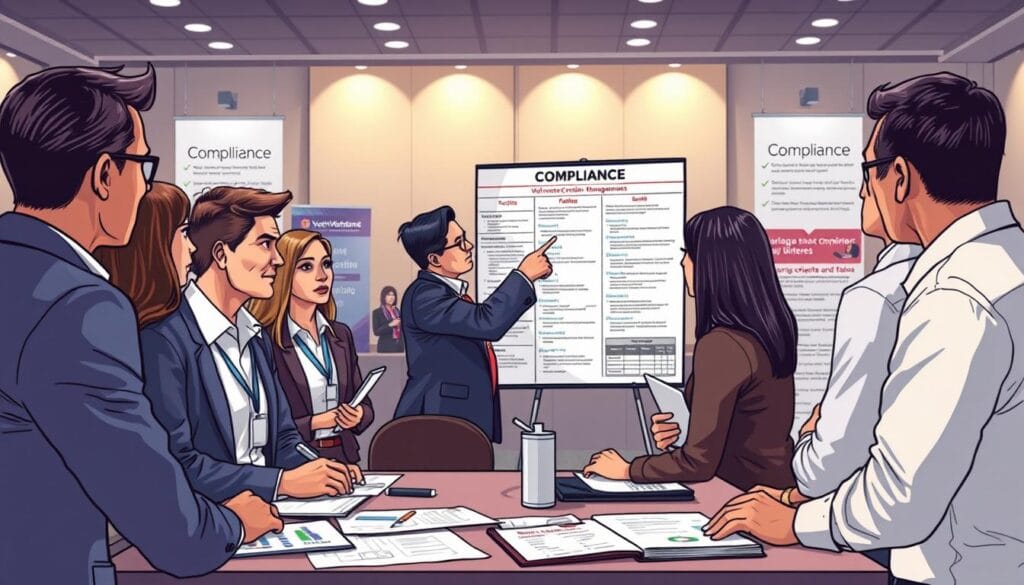
Meeting Hybrid Technology and Legal Compliance Standards
Hybrid events require additional security measures for both physical and digital components. Team members supporting virtual platforms need training on privacy protections and technical troubleshooting.
Medical gatherings involving patient information demand HIPAA compliance training. Establish clear protocols for handling sensitive materials and reporting potential breaches.
| Compliance Area | Key Requirements | Team Training Focus |
|---|---|---|
| CME Accreditation | ACCME standards for education integrity | Disclosure procedures, content separation |
| Venue Operations | Liability coverage, security clearances | Access protocols, emergency response |
| Hybrid Technology | Platform security, privacy protection | Technical support, privacy protocols |
| HIPAA Compliance | Patient data protection standards | Confidentiality training, breach reporting |
| PhRMA Code | Industry interaction boundaries | Documentation standards, disclosure requirements |
Professional Disclaimer: This guide offers general information and does not constitute legal or compliance advice. Consult qualified professionals to ensure your program meets all applicable requirements.
Team leaders serve as critical links between organizational leadership and front-line operations. They provide valuable perspectives for identifying compliance risks and process improvements.
Actionable Checklists and Downloadable Templates for Success
Practical tools transform theoretical coordination into operational excellence. We provide systematic frameworks that eliminate guesswork from program implementation.
Our resources address critical planning stages with precision. They ensure every aspect receives proper attention.
Decision Frameworks to Optimize Roles and Scheduling
Effective assignment begins with clear role definitions. Our template outlines responsibilities, required skills, and time commitments.
Scheduling frameworks utilize modern software platforms. They create detailed plans showing shift times and location assignments.
Communication templates specify primary channels for quick issue resolution. They include emergency procedures and feedback collection methods.
Our complete toolkit includes visual planning tools and budget worksheets. These resources have helped over 60 events optimize their support teams.
Download our Conference Volunteer Management Toolkit today. Access immediate, actionable resources that streamline recruitment and retention processes.
Enhancing Volunteer Experience Through Training and Appreciation
Organizations that prioritize continuous education for their support teams experience measurable improvements in event execution. We establish comprehensive frameworks that transform temporary helpers into long-term advocates.
Innovative Training Techniques and Continuous Education Strategies
Research confirms that individuals receiving high-quality preparation are 83% less likely to discontinue their support. This statistic underscores training’s critical role in sustainable program development.
Our approach combines online modules with hands-on sessions. For example, we organize dedicated orientations where people learn check-in processes in real time. Peer mentorship pairs experienced members with newcomers for complex roles.
| Training Component | Delivery Method | Expected Outcome |
|---|---|---|
| Onboarding & Orientation | In-person sessions + digital materials | Comprehensive role understanding |
| Position-Specific Skills | Hands-on practice with mentors | Confident task execution |
| Mission & Values Education | Interactive online modules | Stronger organizational connection |
| Continued Development | Leadership workshops + advanced training | Long-term engagement growth |
Effective Methods to Show Gratitude and Build Community
Appreciation strategies significantly impact motivation and retention. Personalized thank-you notes mentioning specific contributions create meaningful recognition.
We implement various appreciation methods including celebratory events, branded merchandise, and complimentary session access. These small incentives demonstrate genuine valuation of people’s time and work.
Feedback collection remains essential for program improvement. We conduct satisfaction surveys after each event using multiple question formats. Acting on this input shows we value opinions and strengthens trust.
When support team members feel properly prepared and genuinely appreciated, their commitment transforms from temporary assistance to long-term advocacy.
Building a cohesive community requires deliberate strategies that make individuals feel part of the shared mission. This approach is fundamental to building a high-impact support program with sustainable results.
Conclusion
Effective volunteer coordination represents a strategic advantage that extends far beyond individual conferences. Our comprehensive framework demonstrates how proper management transforms temporary support into lasting organizational assets.
The measurable return on investment is substantial. Volunteer programs expand workforce capacity while creating passionate advocates who become lifelong mission supporters. Organizations implementing these evidence-based strategies consistently achieve superior event outcomes.
Take immediate action to optimize your program: Download our complete toolkit with proven templates and frameworks. Subscribe for ongoing insights into volunteer management updates and technology tools. Share this resource with colleagues to build stronger programs industry-wide.
Organizations investing in strategic volunteer management reap rewards that strengthen financial stability and create lasting community impact. This approach builds the foundation for sustainable organizational success.
FAQ
How can we effectively recruit people for our program?
We recommend a multi-channel strategy. Utilize your organization’s social media, email lists, and community networks. Clearly communicate the roles, time commitment, and the impact of the work. Highlighting the experience and training opportunities often increases interest and applications.
What are the best ways to onboard and train team members?
A structured onboarding process is crucial. Provide comprehensive information packets, schedule orientation sessions, and use training software for consistency. Pairing new recruits with experienced members for mentorship can significantly enhance the learning experience and build a supportive community.
How do we ensure our volunteers feel valued and appreciated?
Regular, genuine feedback and public recognition are powerful tools. Implement an appreciation program that may include thank-you events, certificates, or small tokens of gratitude. Creating a culture of open communication where people feel heard and supported is fundamental to long-term retention.
What technology or platform should we use for coordination?
The best platform depends on your organization’s size and needs. For many groups, tools like Slack for communication, Trello for task management, or specialized volunteer management software like VolunteerLocal work well. The key is to choose a system that simplifies scheduling, communication, and information sharing for everyone involved.
How can we handle scheduling and role assignment efficiently?
Use a centralized scheduling tool that allows individuals to sign up for shifts based on their availability. Clearly define all tasks and responsibilities for each role beforehand. This transparency helps prevent confusion, ensures coverage for all activities, and respects the time commitments of your team.
What strategies help with engagement for long-term involvement?
Foster a sense of community and shared mission. Offer varied opportunities for people to get involved and take on new challenges. Providing pathways for growth, such as leadership roles or specialized training, encourages continued participation and deepens their connection to the organization’s work over many years.