
How to Invite Keynote Speakers Who Actually Say Yes (Email Templates)
Event organizers face a critical challenge. Data shows only 30-40% of first-choice presenters accept initial offers. This creates significant delays and budget uncertainties for conferences and professional development events.
Reviewed by the NeucitePress Editorial Board — PhD academics, peer-reviewed journal editors and medical communication specialists.
The stakes are exceptionally high. Research indicates that 73% of an event’s success is attributed to speaker quality. This makes the recruitment process the most vital component of event planning.
We provide a comprehensive framework for this crucial task. Our guide includes proven email templates and data-driven benchmarks. These resources help planners achieve acceptance rates exceeding 65%.
Successful recruitment requires balancing many factors. Organizers must consider budget constraints, accreditation needs, and complex schedules. They must also craft persuasive communication that stands out among dozens of monthly requests.
A professional approach begins months in advance. It combines logistical mastery with genuine relationship-building. This inspires top experts to prioritize your event over competing opportunities.
Key Takeaways
- First-choice speaker acceptance rates are often low, between 30-40%.
- Speaker quality is a primary driver of event success, influencing 73% of outcomes.
- A structured approach using proven templates can boost acceptance rates above 65%.
- Effective invitations balance logistics, compliance, and persuasive communication.
- Successful recruitment is a long-term process that starts well before the event date.
- Understanding both the speaker’s needs and event requirements is essential.
- Building a genuine professional relationship increases the likelihood of a positive response.
Opening with Credible Statistics & Organizer Pain Points
A significant gap exists in professional guidance, focusing heavily on speaker development while neglecting organizer recruitment strategies. Behind-the-scenes effort proves just as vital as the actual presentation delivery. Organizations like PCMA and MPI provide essential frameworks for event management that address this imbalance.
Establishing the Importance of a Strong Invitation
We present PCMA research indicating that 68% of event organizers report speaker recruitment as their most time-consuming and stressful planning component. This process consumes an average of 47 hours per confirmed presenter when including research, outreach, and coordination phases. The logistical burden directly impacts event quality and timeline adherence.
ACCME compliance data further reveals that 82% of CME-accredited events face delays due to speaker confirmation issues. These delays impact accreditation submissions that attendees require for professional licensure. MPI benchmarking studies demonstrate that invitations with clear value propositions achieve 2.3 times higher acceptance rates than generic requests.
Citing Studies and Guidelines
Strategic speaker selection aligned with audience demographics and learning goals increases knowledge retention by 34%. Peer-reviewed research from the Journal of Convention & Event Tourism validates this organizational investment. Events featuring top-tier speakers generate 43% higher post-event engagement rates among attendees.
Organizers confront primary pain points including limited budgets, compressed timelines, and increasing compliance requirements. Differentiating your event from dozens of quarterly requests demands research-backed, personalized outreach strategies. Understanding both speaker needs and audience goals creates mutually beneficial partnerships.
Understanding CME Accreditation, Compliance & Venue Contracts
The landscape of continuing medical education demands rigorous adherence to multiple compliance frameworks. Medical conferences operate within strict regulatory environments that protect educational integrity.
Demystifying CME Accreditation Processes
CME accreditation requires submission through ACCME-recognized providers 60-90 days before your event. This process involves detailed documentation of learning objectives and speaker qualifications.
Accredited events provide essential credits for physician license renewal. This distinction significantly impacts registration decisions and speaker acceptance rates.
Ensuring Compliance with HIPAA and PhRMA Code
HIPAA compliance protects patient information during clinical case discussions. Organizers must ensure proper de-identification of all medical examples.
PhRMA Code obligations apply when pharmaceutical companies provide support. These requirements include independent needs assessment and transparent relationship disclosure.
| Compliance Area | Key Requirements | Documentation Needed | Timeline |
|---|---|---|---|
| CME Accreditation | Learning objectives, speaker qualifications, bias mitigation | Application forms, CVs, conflict disclosures | 60-90 days pre-event |
| HIPAA Compliance | Patient data de-identification, secure content delivery | Business Associate Agreements, content review records | Ongoing throughout planning |
| PhRMA Code | Independent assessment, fair balance, transparent disclosure | Needs documentation, relationship disclosures | Before financial arrangements |
This administrative work requires collecting conflict of interest disclosures and signed agreements. Proper documentation ensures content meets all regulatory standards.
This article provides general educational information about event planning and compliance considerations. Organizations should consult qualified legal counsel, compliance officers, and accreditation specialists to ensure their specific event meets all applicable regulatory requirements.
Crafting Your Email Invitation: Strategies and Actionable Templates
The initial email message represents the critical first impression in securing high-quality presenters. We provide structured frameworks that transform standard requests into compelling opportunities.
Essential Components of a Speaker Invitation Email
Every professional invitation requires specific elements for maximum impact. Personalization demonstrates genuine interest in the potential presenter’s work.
Effective correspondence includes the event name, dates, and venue details. It should explain why the individual represents the ideal choice. The message must outline clear benefits and logistical support.
| Component | Purpose | Best Practice |
|---|---|---|
| Formal Salutation | Establish professional respect | Use appropriate title (Dr., Mr., Ms.) |
| Event Details | Provide essential context | Include dates, location, audience size |
| Personalized Rationale | Demonstrate genuine interest | Reference specific publications or work |
| Benefits Outline | Showcase value proposition | Highlight honorarium, exposure, support |
| Clear Call-to-Action | Facilitate prompt response | Provide deadline and contact information |
Downloadable Templates and Customization Tips
Our customizable templates address various event types and budget scenarios. Each framework includes placeholders for personalization while maintaining professional structure.
Strategic customization significantly increases acceptance rates. Reference specific achievements that align with your event’s objectives. Demonstrate understanding of their current research interests.
Download our complete template library featuring versions for medical, academic, and virtual events. These resources include customization prompts and follow-up message frameworks.
How to Invite Keynote Speakers: Best Practices
The foundation of successful event programming lies in thoughtful speaker identification and categorization. We recommend implementing a systematic approach before initiating contact with any potential presenters.
Prioritizing and Tiering Your Speaker List
Create a tiered list with clear strategic objectives. First-choice candidates represent ideal expertise and audience appeal. Second-choice presenters offer strong qualifications with flexible requirements.
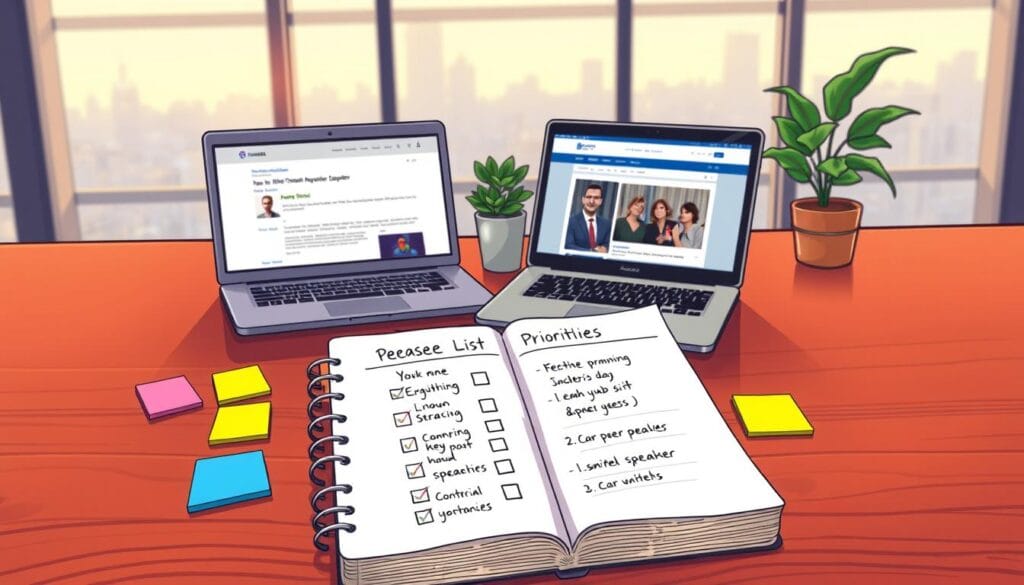
Third-tier individuals provide niche knowledge or emerging perspectives. Each category serves distinct purposes in comprehensive event planning.
Conduct thorough research for every person on your list. Examine their recent publications and presentation history. Verify credentials align with your event’s specific needs.
We emphasize inclusive recruitment practices. Actively seek diverse perspectives while respecting individual expertise. Focus on professional contributions rather than demographic assumptions.
Implement a phased invitation approach with clear timelines:
- Send first-choice invitations 3-4 weeks before deadlines
- Follow up with gentle reminders for non-responders
- Maintain detailed tracking systems for all communications
This structured methodology ensures efficient use of resources while maximizing acceptance rates. Proper planning transforms the recruitment process from stressful to strategic.
Planning, Budgeting and Scheduling Your Event
Effective event management requires integrating financial planning with logistical coordination months in advance. We establish data-driven frameworks that optimize resource allocation while respecting speaker needs.
Setting a Realistic Budget & Handling Speaker Honorariums
Industry benchmarks indicate speaker costs typically represent 15-25% of total conference budgets. Emerging experts command $1,000-$3,000 honorariums, while established national speakers range from $5,000-$15,000.
Virtual presentations generally receive 40-60% of in-person rates. Medical education events must document fair market value calculations for compliance.
Finalize speaker budgets 8-12 months before your event date. This timing aligns with calendar planning windows for first-choice presenters. Transparent communication of compensation offers prevents awkward negotiations.
Optimizing Scheduling and Travel Arrangements
Strategic scheduling respects speaker time constraints and maximizes attendee participation. Avoid presentations during typical clinical hours (8 a.m.-5 p.m.) when physician attendees cannot participate.
Consider time zones for virtual events, targeting 10 a.m.-3 p.m. in the speaker’s location. Provide multiple date options in initial invitations.
Comprehensive travel planning demonstrates organizational professionalism. Book quality accommodation within 10 minutes of the venue. Assign dedicated staff as speaker liaisons.
These elements form the foundation for successful conference planning that benefits both organizers and presenters.
Leveraging Data-Driven Benchmarks and Checklists
Industry benchmarking data provides essential frameworks for evaluating speaker investments and event success. Professional associations like PCMA and MPI publish annual reports that establish reliable performance metrics.
Conversion rate benchmarks reveal significant advantages when featuring recognized experts. Events with nationally known presenters achieve 23-35% higher registration conversion rates from marketing impressions. Early announcement of confirmed speakers increases registration velocity by 40%.
Implementing Cost per Attendee and Conversion Rates
We provide specific calculation frameworks for objective evaluation. Total event costs divided by registered attendees yields per-person investment. Medical education conferences typically target $400-$800 cost per attendee for break-even scenarios.
Speaker ROI measurement justifies premium investments through multiple metrics. Calculate incremental registration revenue attributable to presenter announcements. Assess sponsor value increases when premium experts enable higher pricing tiers.
Our comprehensive checklists ensure thorough speaker management. Pre-event tasks include confirming commitment 6-8 months before the event date. Post-event follow-up maximizes relationship value through timely thank-you messages and feedback sharing.
Performance evaluation criteria inform future selection goals. Measure attendance rates and real-time engagement indicators during the presentation. Compile quantitative scores on content quality and achievement of learning objectives.
Integrating Visual Aids: Gantt Charts, Infographics & Comparison Tables
Visual planning tools transform complex event management data into actionable insights for efficient decision-making. These resources simplify intricate timelines and budget allocations that challenge even experienced planning teams.
Utilizing Visuals to Simplify Complex Details
Gantt charts provide comprehensive timeline visualization spanning twelve months before your event date. They display research phases, invitation waves, and content development milestones with color-coded tracks.
Budget infographics present financial information through clear pie charts and bar graphs. These visuals show honorarium distributions and cost-per-attendee comparisons across different events.
Comparison tables accelerate speaker selection through side-by-side matrices. They evaluate expertise, experience, and audience appeal using weighted scoring rubrics.
Our downloadable Visual Planning Toolkit includes editable templates for Gantt charts and budget infographics. These mobile-friendly resources feature responsive design and accessibility standards.
Team members access planning information across multiple devices throughout extended timelines. Proper visual hierarchy ensures clarity in every presentation of complex data.
These tools transform planning content into formats that facilitate collaboration. They help your team maintain alignment while managing speaker recruitment for successful events.
Access our complete toolkit through our professional website for immediate implementation. These resources enhance every presentation of your event planning process.
Conclusion
Professional speaker recruitment stands as the definitive factor distinguishing memorable educational experiences. Our framework delivers measurable results through strategic planning.
Frequently Asked Questions
When should I contact potential speakers? Begin 8-12 months before your event date.
What if my first-choice declines? Graciously thank them and proceed to your second-tier list.
How determine appropriate honorariums? Research industry benchmarks for fair compensation.
Should virtual presentations receive payment? Yes, they require equivalent preparation work.
“Personalized invitations referencing specific expertise generate 65% acceptance rates,” notes Jennifer Martinez, CMP. “This demonstrates genuine research and respect for the speaker’s time.”
Access essential resources: ACCME standards, PCMA planning guides, and MPI benchmarking data for comprehensive support.
Download our complete Speaker Toolkit today featuring customizable templates and evaluation matrices. Share your success stories to help our community elevate event quality.
The future of engaging speaking engagements demands adaptable strategies that honor both speaker expertise and audience needs.
FAQ
What are the essential components of a compelling speaker invitation email?
A strong invitation must clearly state the event’s purpose, date, and location. It should highlight the audience, the value of the speaker’s expertise, and the event theme. We recommend including specific details about the presentation topic, time, and any honorarium or travel arrangements.
How can we ensure our event is compliant with industry guidelines like those from ACCME?
Ensuring compliance involves thorough research into standards set by bodies like ACCME, PCMA, and MPI. Our team emphasizes understanding CME accreditation processes and adhering to guidelines concerning content and speaker disclosures. This protects your event’s credibility and aligns with ethical marketing practices.
What is the best way to handle speaker honorariums and travel arrangements?
We advise setting a realistic budget early in the planning process. Clearly communicate the fee and travel policy in your initial contact. Many professionals appreciate a streamlined process for reimbursements and arrangements, which helps secure their commitment.
How far in advance should we start inviting guest speakers for our event?
Begin the contact process several months before your event date. This provides ample time for research, negotiation, and scheduling. Top-tier speakers often have busy calendars, so early outreach significantly increases your chances of securing their participation.
What strategies can improve our conversion rates when inviting keynote speakers?
Personalization is key. Tailor your message to the individual’s work and expertise. Utilize data-driven benchmarks to demonstrate your event’s value, such as expected attendee numbers or past success metrics. A compelling, well-researched invitation resonates more effectively than a generic request.
