Pediatric Conference Planning: Child-Focused Event Best Practices
Major medical gatherings demonstrate significant impact across the healthcare landscape. The American Association of Colleges of Nursing executed 30 national events with 11,500 participants who obtained over 4 million continuing nursing education contact hours. Similarly, the PAS Meeting brings together approximately 7,500 attendees each year, including 2,800 first-time participants.
Reviewed by the NeucitePress Editorial Board — PhD academics, peer-reviewed editors and subject-matter specialists.
Organizing child-focused medical events presents unique complexities. Coordinating multi-stakeholder gatherings requires careful attention to diverse specialty needs while maintaining strict medical education compliance standards.
We developed this comprehensive resource to help medical education directors and healthcare administrators navigate these specialized requirements. Our approach addresses the distinct challenges of creating effective learning environments for child health professionals.
These events represent incredible diversity, with participation from over 70 specialties across 60+ countries. This breadth underscores the importance of understanding the dynamics that drive successful knowledge exchange and professional development.
Creating environments that facilitate meaningful networking and research dissemination is crucial. Such settings promote career advancement and contribute significantly to the field’s collective growth.
Key Takeaways
- Major pediatric medical gatherings attract thousands of participants annually
- Event coordination requires balancing diverse specialty requirements
- Successful planning demands compliance with medical education standards
- These events serve professionals from 70+ specialties across 60+ countries
- Effective environments foster knowledge exchange and career growth
- Proper organization delivers measurable value to all participants
- Strategic planning creates opportunities for research dissemination
Opening Hook with Compelling Insights
Organizing medical gatherings for child health specialists presents unique logistical hurdles that demand strategic foresight. The sheer scale of these events reveals operational complexities that begin years in advance.
Compelling Statistics and Organizer Pain Points
Catherine Wilson Cox, PhD, RN, CEN, CNE, former director of programs for AACN, managed 30 national events with 11,500 participants. PAS meetings feature 500 hours of educational content across 70+ specialties.
Event coordinators face significant challenges. These include securing venues several years ahead through RFPs. They must also manage substantial budgets for audiovisual needs and catering services.
Last-minute speaker cancellations create major disruptions. Processing registrations efficiently remains a constant concern. Accommodating diverse technical requirements adds further complexity.
Credible Sources and Expert Quotes
We reference ACCME guidelines and PCMA best practices for evidence-based strategies. Peer-reviewed studies from medical education journals provide foundational insights.
Certified meeting professionals emphasize balancing competing demands. They note the challenge of maintaining affordable fees while covering technology costs and speaker honorariums.
Successful gatherings generate measurable outcomes. These include thousands of CME credit hours and enhanced networking opportunities. Participants report direct improvements in clinical practice upon returning to their institutions.
Understanding Pediatric Conference Dynamics
The dynamics of medical events focused on children’s health differ significantly from general healthcare assemblies due to developmental considerations. We analyze how these gatherings serve professionals from 70+ specialties across 60+ countries.
Child-Focused Event Nuances
Child health gatherings require specialized content delivery that addresses developmental stages. Attendees seek practical guidance for emotional trauma management and ethical considerations.
These events create environments where clinical practitioners exchange breakthrough discoveries. The collaborative atmosphere advances the entire medical field through shared experiences.
Key Trends from Pediatric Experts
Leading specialists are driving content toward interactive formats. Hands-on workshops with simulation equipment provide valuable learning opportunities.
Case-study discussions featuring real patient outcomes enhance practical application. Researchers and clinicians exchange actionable strategies for new treatments.
“The most successful meetings bridge research findings with clinical implementation. They create spaces where ideas transform into improved patient care.”
| Specialty Area | Primary Focus | Session Format Preference |
|---|---|---|
| Neonatal Care | AI Diagnostics | Hands-on Workshops |
| Developmental Pediatrics | Growth Disorders | Case Studies |
| Child Psychology | Emotional Trauma | Interactive Discussions |
| Pediatric Surgery | Advanced Techniques | Simulation Training |
These trends reflect the evolving needs of medical professionals. The program must balance cutting-edge research with practical clinical applications.
Leveraging Data-Driven Benchmarks and Visual Insights
Data-driven financial benchmarks provide medical event organizers with realistic expectations for budget development and resource allocation. We analyze comprehensive expense patterns to establish reliable planning parameters.
Cost per Attendee and Speaker Honorariums
Typical budgets allocate $350-500 per participant for comprehensive services. This covers venue logistics, catering, and essential technology infrastructure.
Speaker compensation packages typically include registration fee waivers and economy travel reimbursement. Ethical honorarium structures maintain professional standards while attracting top talent.
Interactive Visuals: Gantt Charts and Budget Infographics
Visual planning tools transform complex data into actionable information. Gantt charts map critical timelines from initial venue selection through post-event evaluation.
Budget

s clearly communicate cost allocation across major expense categories. These visual aids help organizers make informed decisions about resource distribution.
Early registration strategies serve dual purposes. They incentivize commitment while providing advance data for operational planning. This approach ensures adequate preparation for all program elements.
Navigating CME Accreditation and Compliance Essentials
Accreditation processes form the bedrock of credible medical education events. These frameworks ensure learning experiences meet rigorous professional standards.
Demystifying CME Accreditation and Hybrid Tech Requirements
Organizations must maintain active provider status through the Accreditation Council for Continuing Medical Education. This involves ongoing administrative fees and regular compliance reviews.
Hybrid technology platforms must support both in-person and virtual attendees simultaneously. They provide reliable streaming and interactive features like live polling.
Speaker conflict of interest management requires careful attention. Organizers collect disclosure forms and review potential conflicts with planning committees.
Managing Compliance: HIPAA, PhRMA Code, and Beyond
HIPAA regulations govern discussions of patient cases during presentations. The PhRMA Code restricts pharmaceutical industry interactions and sponsorship arrangements.
We provide clear decision frameworks for managing these complex requirements. Attendees receive emails with instructions to claim CME credits after events.
| Compliance Area | Key Requirements | Documentation Needed | Timeline |
|---|---|---|---|
| CME Accreditation | Active provider status | ACCME application | Annual renewal |
| Speaker Conflicts | Disclosure forms | Committee review notes | Pre-session |
| HIPAA Compliance | Patient privacy protection | De-identification protocols | Ongoing |
| PhRMA Code | Sponsorship guidelines | Interaction records | Event planning |
Professional Disclaimer: While we provide comprehensive guidance based on ACCME guidelines, organizers should consult qualified legal counsel for specific situations. Regulations evolve and individual circumstances may require tailored approaches.
Building a High-Impact Planning Team and Strategy
The foundation of successful medical education events lies in assembling the right expertise and communication systems. We establish frameworks that transform complex coordination into focused workflows.
Recruiting and Compensating Your Planning Committee
Select organizational members who recognize timely topics and identify exceptional speakers. Certified meeting professionals recommend transparent compensation discussions.
Consider registration fee waivers or travel reimbursement for committee service. When budgets cannot support financial compensation, emphasize the professional development value.
Clear communication about time commitments ensures member alignment. Outline specific responsibilities for content development and speaker selection during recruitment.
Utilizing Past Evaluations and Expert Recommendations
Previous attendee feedback identifies which session formats generated highest satisfaction. This data reveals topics that addressed pressing clinical needs.
We recommend establishing efficient communication protocols from the outset. Use scheduling tools that poll members to identify optimal meeting times.
“Committee orientation materials should include evaluation summaries from past events. This data-driven approach prevents redundancy while inspiring fresh content ideas.”
Distribute detailed agendas before meetings and circulate minutes promptly afterward. This maintains momentum for successful medical conferences.
Essential orientation materials include conflict-of-interest forms and contact rosters. Historical theme lists and planning templates provide proven starting points.
Securing Venues, Budgets, and Technical Requirements
Venue acquisition stands as one of the most complex aspects of medical education event coordination, requiring advanced preparation and negotiation skills. We establish frameworks that transform venue selection from overwhelming to manageable.
Successful location management begins years before the actual meeting dates. Early preparation yields better options and favorable terms.
Venue Contracts and Negotiation Best Practices
For large medical gatherings, we recommend issuing detailed requests for proposals to potential hotel partners several years in advance. This approach allows sufficient time to evaluate multiple locations before venues become committed to other organizations.
Comprehensive RFPs must address anticipated attendance numbers, precise meeting space requirements for general sessions and breakout workshops, and exhibit hall dimensions. They should also specify food and beverage needs and audiovisual technology specifications.
Strategic geographic rotation maximizes accessibility for diverse attendee populations. Alternating between regions distributes travel burdens equitably while building relationships with multiple hotel partners.
| Evaluation Criteria | Essential Requirements | Attendee Impact |
|---|---|---|
| Neighborhood Safety | Secure surroundings | Personal comfort |
| Dining Options | Dietary accommodations | Nutritional needs |
| Fitness Facilities | Health amenities | Well-being support |
| Transportation Access | Reliable transit | Convenience factor |
Negotiation best practices include pursuing discounted group room rates and complimentary Wi-Fi access in both sleeping rooms and function spaces. Establish reasonable food and beverage minimums that balance quality catering with budget constraints.
Clarifying cancellation policies and force majeure provisions protects organizational interests. These strategies ensure favorable terms while maintaining professional standards.
Essential Steps: pediatric conference planning guide
Comprehensive organizational tools bridge the gap between strategic vision and operational reality for healthcare events. We developed systematic frameworks that transform complex coordination into manageable workflows.
Actionable Checklists and Downloadable Templates
Our methodology follows a proven 10-step process. This begins with venue selection years in advance and concludes with post-event evaluation.
The critical countdown phase starts months before the gathering. Organizers finalize detailed agendas with appropriate networking breaks. They establish registration processes and develop promotional materials.
Essential onsite execution requires early daily coordination. Staff verify equipment placement and maintain backup supplies. They continuously monitor attendance for efficient registration processing.
Systematic post-event evaluation captures immediate observations. Electronic surveys remain open for one month to maximize responses. This data informs personalized thank-you letters to speakers.
Our templates provide structured approaches for successful medical conferences. They help researchers and professionals implement best practices efficiently.
Maximizing Sessions, Speakers, and Networking Opportunities
Modern medical events achieve their greatest impact through strategic programming that engages diverse learning styles. We focus on creating environments where knowledge exchange flourishes through intentional design.
Successful gatherings balance structured education with organic relationship building. This approach transforms passive attendance into active participation.
Innovative Session Formats and Speaker Engagement
We recommend varied session types to accommodate different learning preferences. Structured poster presentations allow detailed discussion of research methodologies.
Ticketed simulation workshops provide hands-on experience with specialized equipment. These small-group settings foster immersive learning experiences.
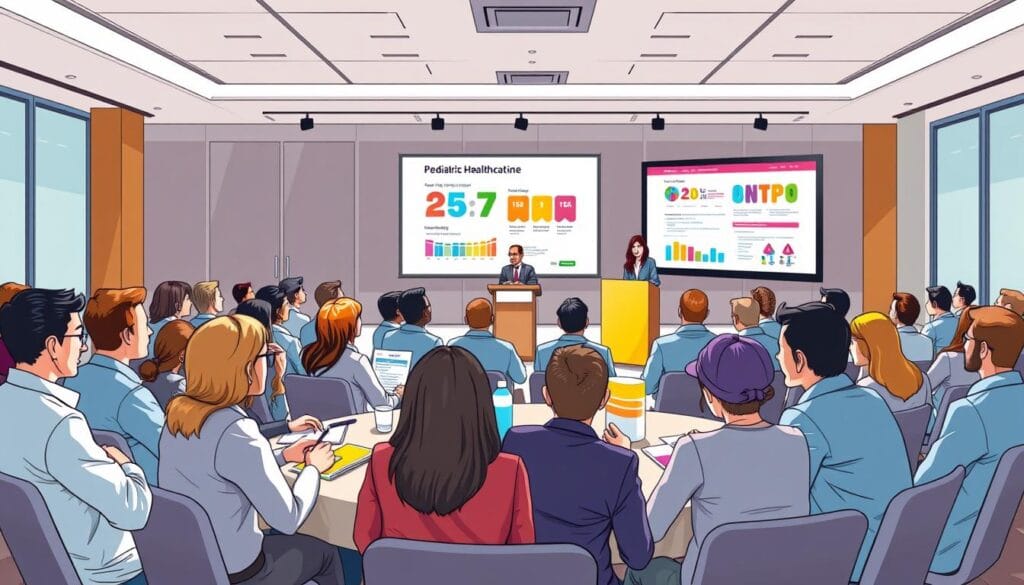
General sessions feature renowned experts addressing broad themes relevant across specialties. Interactive breakouts facilitate case-study discussions and collaborative problem-solving.
Speaker effectiveness increases when organizers provide clear presentation guidelines. Encourage engaging techniques beyond traditional slide decks.
Interactive Tools: Meeting Apps and Networking Strategies
Digital platforms eliminate printed materials while enhancing accessibility. Mobile applications provide real-time schedule updates and session locations.
These tools streamline evaluation submissions and credit claiming processes. Networking features help participants connect with colleagues sharing similar interests.
Strategic scheduling protects unstructured time for organic conversations. Opening receptions create welcoming atmospheres for first-time attendees.
Poster sessions often serve as catalysts for collaborative relationships. Junior researchers receive valuable mentorship during these focused interactions.
Conclusion
The lasting impact of well-organized professional events extends far beyond the meeting dates themselves. These gatherings create environments where knowledge transforms into improved patient care.
We’ve outlined systematic approaches that deliver exceptional value. Following proven methodologies ensures events meet diverse needs across multiple specialties.
Download our customizable templates to streamline your next medical education gathering. Subscribe for updates on emerging trends and regulatory changes. Share this resource with colleagues facing similar challenges.
These experiences advance careers and strengthen our entire field. They provide the tools professionals need for driving success year after year.
FAQ
What are the most important factors when selecting a date and location for our event?
We recommend choosing dates that avoid major holidays and conflicts with other significant gatherings in your field. The location should be easily accessible via major airports and offer suitable hotel options for all participants. Analyzing past attendee feedback on previous events can provide invaluable insights for this decision.
How can we ensure our program content meets the learning needs of diverse professionals?
Engaging a diverse planning committee with representatives from various specialties is crucial. They can help curate a balanced program of sessions and workshops that addresses current research, career growth, and practical clinical applications. Utilizing post-event evaluations from past years is also essential for continuous improvement.
What strategies are effective for securing high-profile speakers and managing their honorariums?
Start invitations early, emphasizing the unique opportunities for engagement and networking at your meeting. Be transparent about budget constraints for speaker honorariums and travel. Many experts are willing to participate for reduced fees if the event aligns with their research interests and offers significant professional exposure.
What technology and services are essential for a successful hybrid or virtual experience?
A> A robust meeting app is non-negotiable for both in-person and remote attendees. It should provide seamless access to the schedule, session materials, and networking features. For hybrid events, invest in professional audiovisual services to ensure high-quality streaming and interactive elements for all participants.
How do we navigate the CME accreditation process and manage compliance requirements?
Begin the accreditation application process well in advance, as it can be lengthy. Designate a team member to manage compliance with standards like the PhRMA Code and HIPAA, ensuring all educational content and interactions meet ethical and legal guidelines. Consulting with accreditation specialists can streamline this complex aspect.
What are the best practices for creating meaningful networking opportunities?
A> Structure dedicated times within the program for networking, such as themed receptions or roundtable discussions. Leverage your event app to facilitate connections based on shared research topics or specialties. Incorporating interactive workshops and small-group sessions also fosters more personal and productive exchanges among attendees.