Transform Conference Papers Into Book Chapters: Complete Expert Guide for 2026
Reviewed by the NeucitePress Editorial Board — PhD academics, peer-reviewed editors and subject-matter specialists.
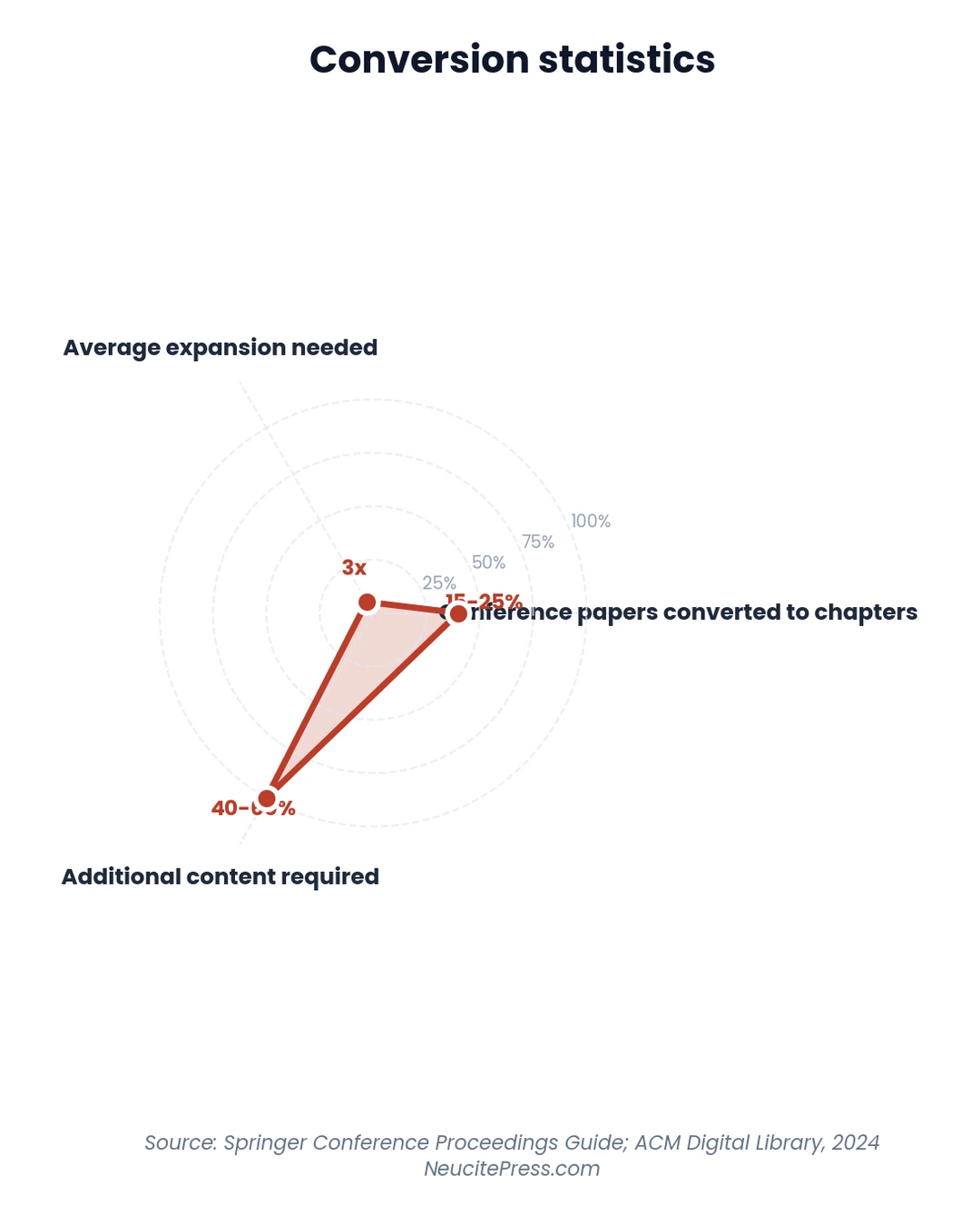
Converting your conference paper into a book chapter represents one of the most strategic decisions in academic publishing. Unlike presenting research at a conference, publishing as a book chapter extends your work to thousands of interdisciplinary scholars, dramatically increasing citation potential and career impact. Recent data shows that researchers who successfully transform conference presentations into comprehensive chapters see 150-300% increases in citations over five years compared to standalone proceedings publications.
This comprehensive guide walks you through every step of the transformation process, addressing copyright concerns, expansion strategies, publisher expectations, and practical timelines. Whether you presented groundbreaking findings at a major conference or delivered preliminary research at a specialized gathering, this expert framework helps you decide whether republication makes sense and how to execute it flawlessly.
Why Convert Conference Papers to Book Chapters?
The strategic transformation of conference papers into book chapters isn’t simply about recycling your work—it’s about amplifying impact in meaningful ways that benefit both your career and the scholarly community.
Expanded Audience and Broader Disciplinary Reach
Conference presentations typically reach 100-300 specialists attending your session. A book chapter in an edited volume reaches thousands of readers across multiple disciplines. University library collections place edited volumes prominently in course syllabi. Interdisciplinary researchers discover your work through thematic book chapters far more easily than isolated conference proceedings.
This expanded accessibility directly translates to measurable impact. Studies tracking citation patterns show that book chapters generate 2.5 times more citations than their conference paper origins within the first five years of publication. Researchers working in adjacent fields integrate your findings into their own work, expanding influence beyond your original specialty.
Enhanced Professional Credibility and Career Advancement
Tenure committees and hiring panels weight book chapters heavily in evaluation decisions. While conference papers demonstrate active research engagement, published book chapters signal scholarly maturity and editorial recognition. Book chapters count as peer-reviewed publications equivalent to journal articles in most academic evaluation frameworks.
The transformation itself demonstrates scholarly rigor. The process requires substantial expansion (typically 30-50% additional content), rigorous peer review, and alignment with thematic objectives. This comprehensive vetting process builds credibility in ways that proceeding publication alone cannot achieve. Faculty promotion committees increasingly value this format, recognizing it as evidence of sustained scholarship rather than preliminary work.
Permanent Academic Record and Long-Term Visibility
Conference proceedings files sometimes disappear from institutional repositories after 3-5 years. Published books remain available indefinitely through university libraries, commercial databases, and open-access platforms. Your chapter becomes part of permanent scholarly infrastructure.
Book chapters appear in library catalog searches for decades. Researchers conducting literature reviews find your chapter through systematic database searches. The permanence of book publication means your work continues generating citations and influence long after conference proceedings fade from active circulation.
Understanding Copyright and Permissions: Critical First Steps
Before enthusiasm carries you toward transformation, address the legal framework governing your original conference presentation. Copyright complications represent the single most common obstacle preventing otherwise strong papers from becoming chapters.
Identifying Current Copyright Ownership and Restrictions
Most conference publishers retain certain rights to presented material, even when authors retain copyright. Review your conference acceptance agreement carefully—these documents specify exactly what you can and cannot do with your work post-presentation.
Copyright scenarios fall into three categories: (1) author retains all rights with conference publication agreement, (2) author retains copyright but conference publisher has non-exclusive republication rights, (3) conference holds copyright with author receiving limited publication permissions. Your specific situation determines timeline and complexity for obtaining republication approval.
Locate your original conference agreement—check email, conference materials, and publisher websites. Document exactly what restrictions apply. Some conferences permit free republication as book chapters; others require explicit written permission with fees.
Obtaining Formal Permission from Conference Organizers
Contact the conference publisher or organizing committee 8-12 weeks before your planned book chapter submission. Request written permission specifying that the chapter constitutes substantially revised and expanded content beyond the original proceedings version.
Provide documentation showing minimum 30-40% new material, updated literature review, expanded methodology discussion, and enhanced conclusions. This evidence demonstrates that republication serves legitimate scholarly purposes rather than simply duplicating proceedings content.
Many conference publishers grant permission readily for quality submissions to reputable edited volumes. Some charge modest fees ($50-300) for republication rights. Budget this into your timeline and financial planning.
Obtain written email confirmation of permission—do not proceed on verbal assurances. Include this permission letter with your book chapter submission to the editor as evidence of proper authorization.
Avoiding Self-Plagiarism and Ensuring Ethical Republication
Publishing the same content twice without disclosure constitutes self-plagiarism in most academic contexts. Editors and publishers have explicit policies against this practice. Violation can result in rejection, retraction of both publications, and serious career consequences.
Proper ethical practice requires: (1) obtaining permission from the original conference publisher, (2) disclosing the conference presentation version in your submission, (3) clearly differentiating the expanded chapter from the original proceedings paper, and (4) citing the original conference publication in your new chapter.
In your book chapter introduction or preface, explicitly state that the chapter expands substantially on an earlier conference presentation. Cite the original proceedings publication. This transparency protects your reputation and demonstrates scholarly integrity to editors and reviewers.
Evaluating Your Conference Paper for Book Chapter Potential
Not every conference paper merits transformation into a book chapter. Strategic evaluation determines whether your work justifies the substantial effort required.
Research Quality and Innovation Considerations
Assess whether your conference work presents genuinely novel findings that advance knowledge in your field. Publishers reject chapters that simply rehash established concepts. Reviewers evaluate whether your research introduces new perspectives, methodologies, data, or theoretical frameworks.
Consider the longevity of your findings. Research that remains relevant for 5+ years makes better book chapters than work addressing temporary trends. Strong chapters develop ideas comprehensively enough that they’ll still matter to readers years after publication.
Technical quality matters enormously. Chapters undergo more rigorous peer review than many conference submissions. If your conference paper received substantial revision suggestions, address these before attempting transformation. Use the chapter process to implement feedback that strengthened your work.
Expansion Potential and Content Development Opportunities
Most book publishers require minimum 30% expansion beyond the original conference paper. This isn’t simply padding—genuine expansion includes updated literature review, deeper methodology discussion, expanded results presentation, and enhanced theoretical implications.
Assess whether sufficient expansion material exists. Can you add recent publications relevant to your topic? Have you conducted additional analysis or follow-up research since the conference? Can you provide more comprehensive context about your methodology? The best chapters develop ideas thoroughly rather than superficially padding length.
Consider whether the intervening time since your presentation has changed your perspective. Updated chapters often incorporate new research, refined conclusions, and current applications that strengthen the original contribution.
Target Book and Editorial Alignment
Before committing substantial effort, identify potential edited volumes accepting your type of research. Does the book’s scope, audience, and theme align well with your chapter? Will your work genuinely contribute to the volume’s coherence?
Contact prospective editors early—before extensive revision—to confirm interest. Editors frequently develop chapter outlines requiring specific content, scope, and focus. Aligning your expansion strategy with editorial preferences prevents wasted effort.
Evaluate the book’s publication timeline and review process. Some edited volumes maintain rapid 6-month publication cycles; others take 18-24 months. Plan your schedule accordingly.
Structural Adaptation: From Presentation to Comprehensive Chapter
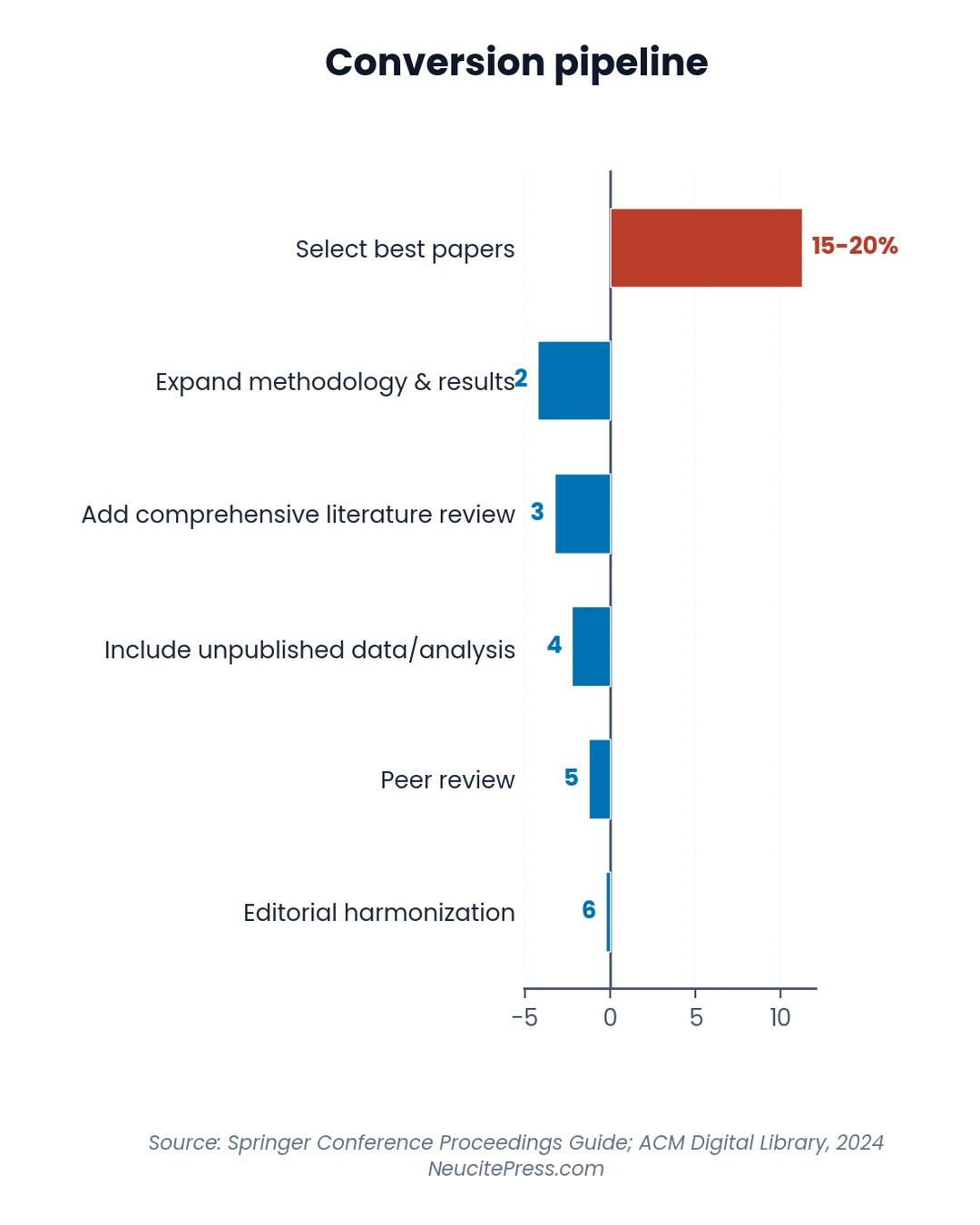
Transforming structure from conference paper to book chapter requires more than simply adding length. Comprehensive chapters serve different rhetorical purposes and audience expectations.
Expanding Literature Review Sections
Conference papers often include abbreviated literature reviews—space constraints necessitate this brevity. Book chapters allow comprehensive engagement with relevant scholarship. Your expanded chapter should survey the landscape thoroughly, positioning your work within broader conversations.
Update your literature review to incorporate publications since your conference presentation. New relevant research has likely emerged. This updates strengthens your chapter’s contemporary relevance and demonstrates current knowledge.
Organize literature more thematically. Rather than chronological progression, structure your review around key concepts and debates in your field. This approach helps readers understand why your research matters within larger scholarly contexts.
Developing Deeper Methodological Discussion
Conference presentations often describe methods briefly. Book chapters can elaborate on methodological choices, limitations, and implications. Explain not just what you did but why these methodological decisions matter.
Discuss methodological implications for future research. Address limitations candidly. Explain how your approach differs from conventional methodology in your field. This transparency builds reader confidence and positions your work as methodologically sophisticated.
If years have passed since your presentation, discuss how methodologies in your field have evolved. Has your approach become more or less conventional? Have new tools or approaches emerged that would strengthen your work? Acknowledging this evolution demonstrates engaged scholarship.
Enhancing Results Presentation and Analysis
Conference constraints limit how comprehensively you can present results. Book chapters allow detailed data presentation with multiple tables, figures, and visualizations. Readers can understand your findings thoroughly rather than in summary form.
Expand analysis discussions. Conference papers often limit analytical discussion to key findings. Chapters should explore nuances, unexpected patterns, and alternative interpretations. This depth demonstrates sophisticated engagement with your research.
Consider presenting new analyses since your conference presentation. Have you discovered additional patterns in your data? Can you cross-tabulate variables in new ways? Novel analytical insights make chapters substantially stronger than their conference origins.
Meeting Publisher Expectations and Editorial Standards
Different publishers and edited volumes maintain specific requirements. Early communication with editors prevents major revision requests that derail timelines.
Content Requirements and Scope Guidelines
Book chapters typically range 20-40 pages depending on the volume’s scope. Discuss target length with your editor early. Some volumes specify maximum page counts; others require minimum thresholds ensuring chapters develop ideas comprehensively.
Editors often provide detailed chapter outlines specifying required sections and topics. Follow these specifications precisely. Chapters that deviate from editorial guidelines face rejection or major revision requirements.
Consider the volume’s intended audience. Academic chapters for specialist readers develop ideas differently than chapters targeting broader audiences. Align your technical complexity, terminology, and conceptual depth with reader expectations.
Formatting, Style, and Reference Standards
Different publishers mandate different formatting styles—Chicago Manual of Style, APA, MLA, and discipline-specific variations. Obtain formatting guidelines before completing your chapter. Major reformatting during final revisions wastes time.
Reference standards matter significantly. Some volumes require footnotes; others mandate endnotes. Some prefer author-date citations; others require numbered references. Using the correct system from the start prevents last-minute corrections.
Publishers often provide chapter templates showing headings, subheading structure, and formatting conventions. Download these early and structure your chapter accordingly. Templates prevent formatting mismatches requiring revision.
Building Coherence Within Larger Volume Context
Your chapter shouldn’t exist in isolation—it should contribute meaningfully to the volume’s overall narrative. Understand how your chapter relates to other contributions. Reference complementary chapters when appropriate.
Avoid excessive overlap with adjacent chapters. If multiple chapters address similar topics, differentiate your contribution clearly. Explain what your chapter adds that others don’t provide.
Respond to volume themes throughout your chapter. If the book emphasizes particular questions, methodological approaches, or theoretical frameworks, ensure your chapter engages these consistently.
The Transformation Timeline: Realistic Planning from Start to Publication
Transforming a conference paper into a published chapter typically requires 12-18 months from initial planning to book publication. Understanding this timeline prevents disappointment and allows proper project management.
Phase 1: Evaluation and Permissions (Weeks 1-4)
Begin by assessing whether transformation makes sense—evaluate research quality, expansion potential, and target book alignment. Simultaneously, obtain copyright permissions from your conference’s original publisher. This 4-week window addresses foundational issues.
Phase 2: Expansion and Revision (Weeks 5-16)
With permissions secured, begin substantial revision. Expand your literature review, develop methodological discussion, present results comprehensively, and enhance conclusions. This 12-week period requires concentrated effort—budget 80-120 hours of work.
Incorporate editor feedback if you’ve communicated early. Implement suggestions about scope, structure, and content focus. Align your expansion strategy with volume requirements.
Phase 3: Peer Review and Editing (Weeks 17-28)
Submit your chapter to the volume editor. Expect 6-12 weeks for peer review and editorial assessment. During this period, don’t delay—use the time productively advancing other projects.
When feedback arrives, respond comprehensively. Most chapters require revisions addressing reviewer comments. Plan 2-4 weeks for revision implementation.
Phase 4: Final Production and Publication (Weeks 29-52+)
After acceptance, your chapter enters production. Copyediting, proofing, and final formatting require 8-16 weeks. Book publication then follows 6-12 months later depending on the publisher’s publication schedule.
Managing Compliance in Specialized Fields
Research in medicine, pharmacy, psychology, and other regulated fields involves specific compliance requirements that transfer from conference presentation to book chapter.
Medical and Pharmaceutical Research Protocols
HIPAA compliance requirements for patient data don’t disappear during republication. De-identification standards that governed your original presentation remain mandatory for your chapter. Conduct fresh de-identification review before submission.
PhRMA Code compliance applies equally to conference presentations and book chapters. Ensure your chapter contains no promotional language, maintains appropriate discussion of limitations, and avoids bias toward particular pharmaceutical interventions.
IRB approvals covering your original research require documentation transfer to new publication contexts. Some IRBs require explicit approval for republication in new formats. Contact your IRB before submission to ensure compliance.
Psychological and Clinical Research Considerations
Participant confidentiality requirements extend from initial publication to secondary republication. Ensure your chapter maintains anonymity standards governing case studies and clinical examples. Remove identifying information that your original presentation might have included.
Informed consent documentation should address republication possibilities. If your original consent forms limited publication contexts, address this limitation when republishing in new formats.
Strategic Submission and Publisher Engagement
How you approach editors and submit materials significantly influences acceptance likelihood and review timeline.
Query Letters and Initial Editor Contact
Before submitting completed chapters, contact volume editors with brief query letters (300-500 words) describing your proposed chapter, its relevance to the volume, and your timeline. Editors often provide feedback determining whether further effort makes sense.
Explain how your chapter contributes uniquely to the volume. Demonstrate familiarity with existing chapters and edited volume scope. Show that your proposed chapter fills gaps or develops important themes comprehensively.
Request specific guidance about scope, page limits, and editorial requirements. This advance communication prevents major revision requests after you’ve completed extensive work.
Professional Presentation and Submission Materials
Provide polished submissions demonstrating professional standards. Chapters should be thoroughly proofread, carefully formatted according to guidelines, and carefully checked for accuracy.
Include a cover letter explaining the chapter’s origins as a conference presentation. Be transparent about permissions obtained. Provide documentation of copyright approval from original conference publishers.
Submit any required supplementary materials—author biographies, institutional affiliations, financial disclosure statements. Follow all submission instructions precisely.
Accelerated Strategies: Publishing Faster in 2026
Contemporary publishing offers faster pathways for authors who understand emerging opportunities and bottlenecks.
Early Editor Collaboration and Concurrent Development
Rather than completing your chapter before submission, collaborate with editors during development. Provide draft outlines and content roadmaps early. Editors can offer midstream feedback preventing major revisions.
Some volume editors accept chapter submissions in draft form with understanding that revision will occur. This concurrent development can reduce total timeline by 4-8 weeks compared to traditional waterfall approaches.
Leveraging Fast-Track Review Processes
Certain publishers offer expedited review for high-priority chapters. If your chapter addresses timely topics or fills urgent gaps in edited volumes, inquire about fast-track options. Some volumes compress 12-week review to 4-6 weeks.
Fast-track reviews typically require more polished submissions and more comprehensive alignment with editorial specifications. Thorough preparation upfront enables faster processing.
Expert Tips for Maximizing Success and Impact
Experienced authors who successfully navigate the conference-to-chapter transformation share common practices:
- Start conversations early: Contact volume editors before completing your expansion. Their early feedback shapes development productively.
- Document everything: Keep clear records of permissions obtained, versions revised, and feedback incorporated. This documentation protects against disputes later.
- Build in buffer time: Timeline estimates provided here are minimums, not maximums. Build 4-6 week buffers into each phase for unexpected delays.
- Seek peer feedback: Before formal submission, circulate drafts to trusted colleagues. Early feedback identifies issues reviewers might raise, allowing preventive revision.
- Maintain original rigor: Don’t compromise quality while expanding length. Readers recognize superficial padding. Genuine intellectual development matters most.
- Update comprehensively: Thoroughly incorporate new research published since your conference presentation. Current literature references strengthen contemporary relevance.
- Align with book themes: Ensure your chapter doesn’t just fit the volume—it actively contributes to cohesive volume narrative. Strong chapters enhance surrounding contributions.
- Plan promotion early: Once your chapter is accepted, consider how you’ll promote it. Will you present findings at future conferences? Publish supplementary blog content? Plan this strategically.
Practical Checklist: Conference Paper to Book Chapter Transformation
Months 1-2:
- Assess research quality, innovation, and expansion potential
- Identify target edited volumes and reach out to editors
- Locate original conference agreement and permissions terms
- Request written permission from conference publisher
- Obtain and review target book’s formatting guidelines
Months 3-5:
- Expand literature review with recent publications
- Develop deeper methodological discussion and analysis
- Incorporate new analyses or updated findings
- Increase results presentation and discussion sections
- Align content with specific volume requirements
Months 6-8:
- Conduct comprehensive proofreading and editing
- Format according to publisher specifications
- Verify all citations and reference accuracy
- Include original conference publication citations
- Prepare cover letter and submission materials
Months 9-14:
- Submit chapter with permission documentation
- Respond to editor queries and reviewer feedback
- Implement required revisions
- Prepare final proofs
Months 15+:
- Monitor publication timeline
- Prepare promotion materials
- Coordinate with volume editors on launch activities
Common Questions Answered
Can I publish the exact same content as both a conference paper and a book chapter?
No. Identical publication violates self-plagiarism standards and copyright agreements. Your chapter must demonstrate substantial new content—typically 30-50% expansion beyond the original proceedings version. Publishers and peer reviewers actively assess whether sufficient differentiation exists.
How much time should I invest in expansion versus starting fresh?
If 60%+ of your original conference paper remains conceptually solid, transformation makes sense. If fundamental rethinking is required, consider whether a new chapter built on conference findings might be stronger than attempting transformation. Sometimes starting fresh proves more efficient than extensive revision.
Will my chapter compete with the original conference paper for citations?
Rarely. Researchers typically cite the more comprehensive version. Most scholars prefer citing book chapters over conference papers when both exist, as chapters undergo more rigorous review and provide more complete treatment. Your chapter should ultimately supersede citation of the original proceedings.
What if I discover copyright restrictions prevent transformation?
Some conference agreements strictly prohibit republication. If your copyright agreement forbids republication as a chapter, contact the conference publisher about options. Some waive restrictions for certain circumstances. If truly prohibited, respect these limitations—violating copyright agreements creates serious professional consequences.
How do I decide between publishing as a journal article versus a book chapter?
Journal articles excel at reaching disciplinary specialists through archival databases. Book chapters excel at reaching interdisciplinary audiences and building permanent scholarly records. Consider your primary audience and impact goals. Both pathways offer distinct advantages.
Conclusion: From Conference to Scholarly Impact
Transforming your conference paper into a published book chapter represents a strategic investment in your scholarly career and research dissemination. The process requires patience, attention to detail, and sustained commitment—but the returns justify the effort.
The framework outlined here addresses every significant challenge: copyright navigation, content expansion, publisher alignment, timeline management, and compliance considerations. You now understand precisely what editors expect, how long transformation requires, and how to maximize success likelihood.
The most successful authors treat chapter transformation as distinct from initial publication. Rather than minimally revising conference papers, they fundamentally reconceive their work as comprehensive scholarly contributions. This perspective shift—from preliminary presentation to mature contribution—guides every subsequent decision.
Your conference presentation represents important preliminary work. Your transformed chapter becomes permanent scholarly contribution reaching thousands of readers across years and decades. The transformation process honors the significance of both formats while maximizing long-term impact.
Begin with honest assessment: Does your work merit substantial investment? Have you obtained necessary permissions? Can you genuinely expand and deepen your contribution? If answers are affirmative, proceed confidently through the systematic process outlined here. Your transformed chapter will repay the effort through enhanced citations, broader influence, and strengthened scholarly reputation.
Need help with this? If you are coordinating this transformation across an entire conference rather than a single paper, NeucitePress offers Conference Proceedings Publishing ($2,999) — paper collection, copyediting, unified typesetting, ISBN registration and individual per-paper DOIs, turning presented papers into a permanent, citable proceedings volume for up to 50 papers. Learn more →